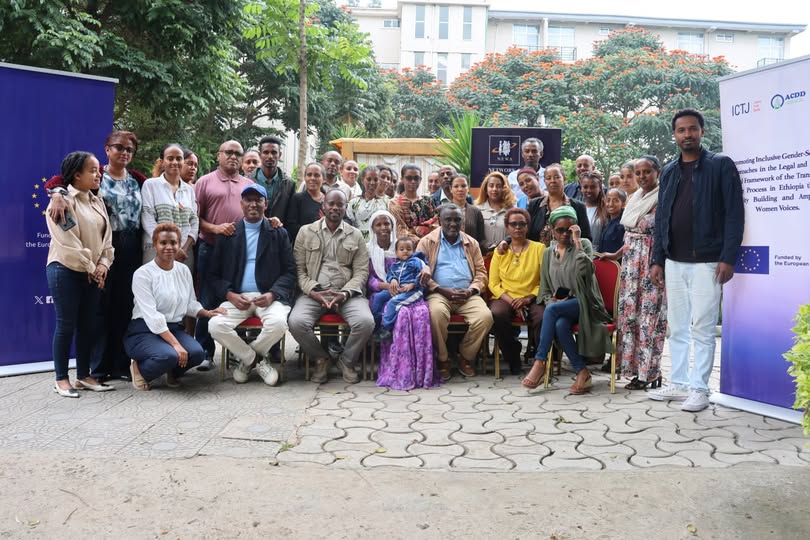
Author name: NEWA

In partnership with Oxfam GB Ethiopia, NEWA has held a two-day Capacity Building Training

In partnership with Oxfam GB Ethiopia, NEWA has held a two-day Capacity Building Training In a strategic effort to elevate gender-responsive programming, the Network of Ethiopian Women’s Associations (NEWA), in collaboration with Oxfam GB Ethiopia, hosted a two-day Capacity Building Training from August 28–29, 2025, at Yatu International Hotel in Bishoftu. The workshop convened 33 participants—21 women and 12 men—drawn from NEWA staff and partner organizations. The focus was Unpaid Care and Domestic Work (UCDW), a critical yet often overlooked pillar of socio-economic development. Through interactive sessions, participants explored the systemic impact of care work and developed actionable strategies to ensure it is recognized, reduced, and redistributed. By strengthening the knowledge and skills of NEWA staff and partners, we are paving the way for gender-responsive programs and stronger advocacy that value care work as central to equality and development.

In partnership with Oxfam GB Ethiopia, NEWA has held a two-day Capacity Building Training Read More »

NEWA, with support from UNICEF, organized a two-day capacity building training (on “Monitoring, Evaluation and Documentation of Social and Behavior Change Communication (SBCC) Programs.”

NEWA, with support from UNICEF, organized a two-day capacity building training (on “Monitoring, Evaluation and Documentation of Social and Behavior Change Communication (SBCC) Programs.” BISHOFTU, August 27, 2025 — The Network of Ethiopian Women’s Associations (NEWA), with support from UNICEF, successfully conducted a two-day capacity building training focused on Monitoring, Evaluation, and Documentation of Social and Behavior Change Communication (SBCC) Programs. Held from August 26–27 at Bishoftu, the training brought together 38 participants—including 23 women and 15 men—from NEWA and its member organizations. The sessions were designed to deepen participants’ understanding of MEL (Monitoring, Evaluation, and Learning) within the SBCC framework and equip them with practical tools to enhance program effectiveness. Key topics included: Defining MEL in the SBCC context Mapping inputs to impacts through logical frameworks Developing SMART indicators tailored to SBCC goals Applying Theory of Change and Results Frameworks Identifying reliable data sources and conducting Data Quality Assessments (DQA) Designing comprehensive MEL plans Documenting lessons learned and success stories By the conclusion of the training, participants had strengthened their capacity to monitor, evaluate, and document SBCC interventions with greater precision and insight. NEWA’s Program Coordinator urged attendees to actively apply their new skills and share best practices across their respective organizations to amplify impact and foster a culture of learning.This initiative reflects NEWA’s ongoing commitment to evidence-based programming and gender-responsive development.

NEWA, with support from UNICEF, organized a two-day capacity building training (on “Monitoring, Evaluation and Documentation of Social and Behavior Change Communication (SBCC) Programs.” Read More »

Media Professionals Convene to Validate Guidelines on Care Economy Representation

Media Professionals Convene to Validate Guidelines on Care Economy Representation In a significant step toward reshaping public narratives around unpaid care and domestic work (UCDW), NEWA, in collaboration with Oxfam GB Ethiopia and Ethiopia Media Authority, hosted a Validation Workshop focused on Media Guidelines for the Care Economy. Held at the Dreamliner Hotel in Addis Ababa, the event brought together 15 media professionals and key stakeholders from across sectors. The workshop aimed to refine and validate a set of media guidelines that will help ensure care work is portrayed with accuracy, dignity, and impact. Participants engaged in thoughtful dialogue around the role of media in amplifying the voices of women and recognizing the often-invisible labor that sustains households and communities. Organizers emphasized that these guidelines are not just about responsible reporting—they are a call to action for media practitioners to help build stronger, fairer societies by elevating the value of care work. This initiative marks a pivotal moment in the broader movement to integrate care economy issues into mainstream discourse, challenging stereotypes and promoting equity through informed storytelling.

Media Professionals Convene to Validate Guidelines on Care Economy Representation Read More »

NEWA Hosts Transformative Training for Women Politicians in Oromia

NEWA Hosts Transformative Training for Women Politicians in Oromia The Network of Ethiopian Women’s Associations (NEWA), in collaboration with Demo Finland, successfully conducted a two-day capacity-building training in Adama from 13–14 August 2025. This training was part of the ongoing “Inclusive Women’s Political Participation in Ethiopia” initiative, which aims to amplify the voices and visibility of women in politics through targeted empowerment, inclusive communication, and strategic media engagement. The Adama training convened 33 women politicians representing a wide spectrum of political parties across Oromia region. Participants brought diverse lived experiences, political perspectives, and regional insights creating a dynamic learning environment rooted in peer exchange and mutual support. The training was designed to equip participants with practical skills and inclusive strategies to navigate Ethiopia’s complex political and media landscapes. Key objectives included: Strengthening inclusive communication practices that reflect Ethiopia’s rich social norms, cultural diversity, and political realities. Promoting respectful and rights-based language, with a focus on eliminating derogatory terms and stereotypes especially those targeting persons with disabilities. Building confident and compelling public speaking skills to influence political discourse, mobilize constituents, and foster community trust. Enhancing media engagement strategies to increase visibility, shape public narratives, and counter barriers to women’s representation in political media. Participants engaged in interactive sessions and practical exercises covering: Principles of inclusive and audience-sensitive communication Techniques for impactful public speaking and message delivery Strategic media engagement, including interview preparation and framing political messages Analysis of structural and cultural barriers limiting women’s media presence in politics Facilitators emphasized the importance of intersectionality, emotional intelligence, and contextual awareness in all forms of political communication. Participants also reflected on their own experiences with media bias, public scrutiny, and the challenges of navigating political spaces as women.

NEWA Hosts Transformative Training for Women Politicians in Oromia Read More »

The Ethiopian Women Peace Table Visits Assosa to Show Solidarity and Amplify Women’s Voices in Conflict-Affected Communities

The Ethiopian Women Peace Table Visits Assosa to Show Solidarity and Amplify Women’s Voices in Conflict-Affected Communities Solidarity Visit to Assosa City, Benishangul-Gumuz RegionFacilitated by NEWA in Partnership with ACCORD and with financial support from Irish Aid In a powerful show of solidarity, NEWA facilitated a two-day solidarity visit to Assosa City in the Benishangul-Gumuz region on August 6 and 7, 2025 in collaboration with ACCORD and with the financial support from Irish Aid. The visit was conducted with members of the Ethiopian Women’s Peace Table (EWPT), established in Pretoria in 2023, to strengthen the safe and collaborative space it provides for women leaders working toward a unified vision for the Women, Peace and Security (WPS) agenda in Ethiopia. The primary objectives of the visit were to: Demonstrate solidarity with local women peacebuilders and affected communities. Engage government stakeholders in dialogue on the current peace and security situation in the region. Reflect on women’s engagement in peacebuilding to date and identify strategic actions to enhance women’s protection, prevention, and participation in peace processes. Discussions were held with: Government stakeholders (women affairs office, peace and security office, Justice administration, Judges and local millisha office (local police office) Local women-led peace initiatives. Former participants of the Coffee for Peace program. Members of the mothers for Peace network. The peacebuilding group, which has previously carried out similar peace missions in Dessie and will continue this mission to other parts of the country affected by conflict, aims to amplify the voices of women who are often excluded from peace processes, despite bearing the brunt of violence, displacement, and economic hardship. The visit provided an opportunity to listen directly to women local peace initiative, Mother for peace and former coffee for peace program participants, understand their challenges, appreciate their resilience, and discuss concrete steps toward inclusive peacebuilding. The journey began on August 6th  at the Mujejeguwa Loka Women Development Association’s, Assosa field office, which also serves as a small shelter for women affected by conflict. Here, the group engaged in an open dialogue with women local peace initiative, Mother for peace and former coffee for peace program participants, exchanging questions, experiences, and perspectives, while listening to their voices, struggles, and aspirations, and discussing ways to work together in the future to strengthen women’s participation in peacebuilding. The participant mainly highlighted their contribution to bring the peace during the conflict particularly in 2010-2012 in Ethiopian Calander, also they mentioned that they need to work to strength peace within the region if they got the necessary support and recognition for their work. From there, the visit continued to the Women and children shelter Asossa center, where the peacebuilding group provided much-needed material support, including essential food supplies, as a gesture of solidarity. Later in the day, the delegation also visited the Assosa One-Stop Center, a shelter supporting women and children affected by conflict and living within host communities, a facility constructed by the Benishangul-Gumuz Regional State Bureau of Women and Social Affairs. On the following day, August 7th, the Ethiopian Women’s Peace Table (EWPT) met with government stakeholders to introduce the network’s mission, raise critical questions regarding the protection of women in conflict zones, and advocate for their meaningful inclusion in peace processes. The discussions were frank, solution-focused, and rooted in the shared belief that sustainable peace must be inclusive. Following this engagement, a discussion was made with conflict affected women living within host communities and have not gained economic opportunity. These women suffer from trauma, loss of beloved ones and less economic and work activities, listening to their struggles and hardships, exploring practical solutions, and discussing ways to collaborate in the future to strengthen their role in building peace, EWPT provided essential food supplies and conveyed a clear message that they stand alongside these women in their journey toward recovery and empowerment. The visit concluded at Benishangul gumuz region Assosa center women and children shelter, still under construction, which will soon provide a safe haven for women affected by conflict, a tangible sign of ongoing efforts to create spaces of protection and hope in Benishangul Gumus Region. Throughout the two days, the Ethiopian Women’s Peace Table (EWPT) reaffirmed its commitment to stand with women across Ethiopia, ensuring they are not only heard but actively engaged in shaping the solutions that will bring lasting peace. The visit concluded with reflections from the EWPT team, focusing on possible solutions and a forward-looking action plan. The discussions centered on the needs expressed by peacebuilder women and government stakeholders in Assosa city, Benishangul-Gumuz region. The team agreed to prioritize advocacy, resource mobilization, moral support, and continued solidarity.

The Ethiopian Women Peace Table Visits Assosa to Show Solidarity and Amplify Women’s Voices in Conflict-Affected Communities Read More »

NEWA, in partnership with UNICEF and IPPF, held a two-day training for media professionals

NEWA, in partnership with UNICEF and IPPF, held a two-day training for media professionals BISHOFTU, July 30, 2025 — In a collaborative initiative to promote ethical and gender-sensitive reporting of GBV incidents, NEWA—working in partnership with UNICEF and IPPF—concluded a two-day training workshop for 31 media professionals, including 10 men and 21 women, in Bishoftu. The training focused on Gender-Based Violence (GBV), Female Genital Mutilation (FGM), Child Marriage (CM), advocacy techniques, and sensitive reporting practices. Participants engaged in in-depth sessions exploring the causes, status, and impacts of GBV and harmful traditional practices, while strengthening their ethical reporting capacities. One of the key outcomes was the formation of a dedicated media taskforce composed of representatives from television, radio, and digital media, alongside members of NEWA and the Ethiopian Media Authority (EMA). The task force aims to champion gender equality by using media as a tool for awareness, prevention, and response. “This marks a critical step in empowering Ethiopian media to report responsibly on gender issues and advance public dialogue for lasting change,” organizers said.

NEWA, in partnership with UNICEF and IPPF, held a two-day training for media professionals Read More »

Consultative Meeting Held on the Proposed Revision of CSOs Proclamation

Consultative Meeting Held on the Proposed Revision of CSOs Proclamation On July 3, 2025, NEWA convened a consultative meeting at Kaleb Hotel, Addis Ababa with its member organizations and the Women’s Political Participation Community of Practice (CoP) to discuss the proposed revision of Civil Societies Proclamation No. 1113/2019.The Ministry of Justice (MoJ) and the Agency for Civil Society Organizations (ACSO) have initiated a process to revise the current Proclamation. Among the proposed amendments are a deeply concerning provision: the restriction of CSOs from engaging in areas deemed “political advocacy,” including activities such as voter education. Such changes threaten to roll back the progress achieved and risk silencing crucial civic voices, particularly those of women and marginalized groups.The meeting aimed to Voice collective concerns regarding the proposed amendments, Explore the implications from a gender and inclusion perspective, and Consolidate recommendations to contribute constructively to the ongoing review process.  

Consultative Meeting Held on the Proposed Revision of CSOs Proclamation Read More »

NEWA held a Bi-Annual Task Force Consultation Meeting

NEWA held a Bi-Annual Task Force Consultation Meeting As part of the She Leads project, NEWA held a Bi-Annual Task Force Consultation Meeting on June 30, 2025, at Kaleb Hotel, Addis Ababa.The consultation brought together key government representatives, youth leaders, and civil society organizations to reflect on project achievements, identify ongoing challenges, and strengthen coordination in the collective pursuit of gender equality and youth empowerment.The session opened with a powerful reminder of the importance of inclusive dialogue and accountability. It provided a platform to review six months of project progress, with reports and updates highlighting the impact of grassroots initiatives led by sub-grant partners. These efforts demonstrated the growing strength of youth-led movements and their role in driving meaningful change at the local level.Government bodies—including the Ministry of Finance (MOF), Ministry of Planning and Development (MOPD), Ministry of Women and Social Affairs (MOWSA), Ministry of Education (MOE), Ministry of Labor and Skills (MOLS), Bureau of Women and Social Affairs (BOWSA), and Addis Ababa Bureau of Education in Addis Ababa—offered reflections and expressed a strong commitment to closer collaboration with youth actors and civil society partners.A critical challenge identified during the meeting was the delay in ratifying the National Youth Policy—a gap that continues to hinder national-level engagement and recognition of young people’s voices. In response, youth leaders from the Ethiopian Young Woman Voice (EYWV) took the floor to share their progress, raise strategic questions, and call for action. Their presence underscored the power of youth-led advocacy and demanded concrete responses from the task force.The meeting concluded with a unifying message: “When we work for women, we are also working for 50% of men. Engaging young women—especially through platforms like EYWV—is essential. Our collaboration must continue. This task force is here to shape a better future for girls and young women. If we want real change, we must work together.”The consultation affirmed the importance of sustained multi-stakeholder engagement and a shared vision for a more inclusive, just, and equitable society—where girls and young women lead the way.

NEWA held a Bi-Annual Task Force Consultation Meeting Read More »

NEWA successfully conducted a two-day peacebuilding and conflict resolution training across five regional states

NEWA successfully conducted a two-day peacebuilding and conflict resolution training across five regional states Over the past two months, from May to June, NEWA successfully conducted a two-day peacebuilding and conflict resolution training across five regional states: Benishangul-Gumuz, Afar, Amhara, Tigray, and Oromia. The primary objective of this training was to enhance participants’ knowledge and skills related to peacebuilding, conflict resolution, and the implementation of the Women, Peace, and Security (WPS) Agenda. The training covered essential themes, including the definition of key concepts, analysis of conflict dynamics, and various resolution strategies such as dialogue, mediation, and negotiation. A significant focus was placed on the importance of gender-sensitive approaches, as emphasized by the United Nations Security Council Resolution (UNSCR) 1325, highlighting barriers and opportunities for women’s participation in peace processes through practical case studies.

NEWA successfully conducted a two-day peacebuilding and conflict resolution training across five regional states Read More »

NEWA organized an Awareness Creation Training for Media Outlets focused on international, continental, and national legal frameworks governing the political rights of women and persons with disabilities.

NEWA organized an Awareness Creation Training for Media Outlets focused on international, continental, and national legal frameworks governing the political rights of women and persons with disabilities. The Network of Ethiopian Women’s Associations (NEWA) is currently implementing a project titled “Inclusive Women’s Political Participation in Ethiopia,” with financial support from the Political Parties of Finland for Democracy—Demo Finland. This initiative is being carried out across Oromia and Benishangul-Gumuz Regional States, as well as in Addis Ababa through engagement with national political parties. The project’s overarching aim is to encourage political institutions to adopt more inclusive approaches, practices and take actionable steps toward increasing diversity in political participation, particularly for women and persons with disabilities. In collaboration with Demo Finland, NEWA is dedicated to advancing an inclusive, multi-party democratic system in Ethiopia. As part of this commitment, NEWA organized an Awareness Creation Training for Media Outlets focused on international, continental, and national legal frameworks governing the political rights of women and persons with disabilities. The training session, held from 23-24 June 2025 at Robi Hotel in Adama, and brought together 40 female participants representing various media houses. From the total participants two of them (5%) were women with disabilities. Objectives of the training included: Enhancing participants’ understanding of legal frameworks that safeguard the political rights of women and persons with disabilities at international, regional, and national levels Promoting media coverage that accurately and inclusively addresses political issues affecting women and persons with disabilities Shifting perceptions and behaviors within media institutions to better recognize and support the role of women and persons with disabilities as political decision-makers Key training topics covered: Foundational principles of political participation for women and persons with disabilities The current political status and representation of these groups in Ethiopia International conventions ratified by Ethiopia concerning political inclusion Continental legal instruments adopted by the country related to rights and participation National legislative provisions advancing the political rights o marginalized groups Strategic pathways to strengthen inclusive political participation going forward

NEWA organized an Awareness Creation Training for Media Outlets focused on international, continental, and national legal frameworks governing the political rights of women and persons with disabilities. Read More »