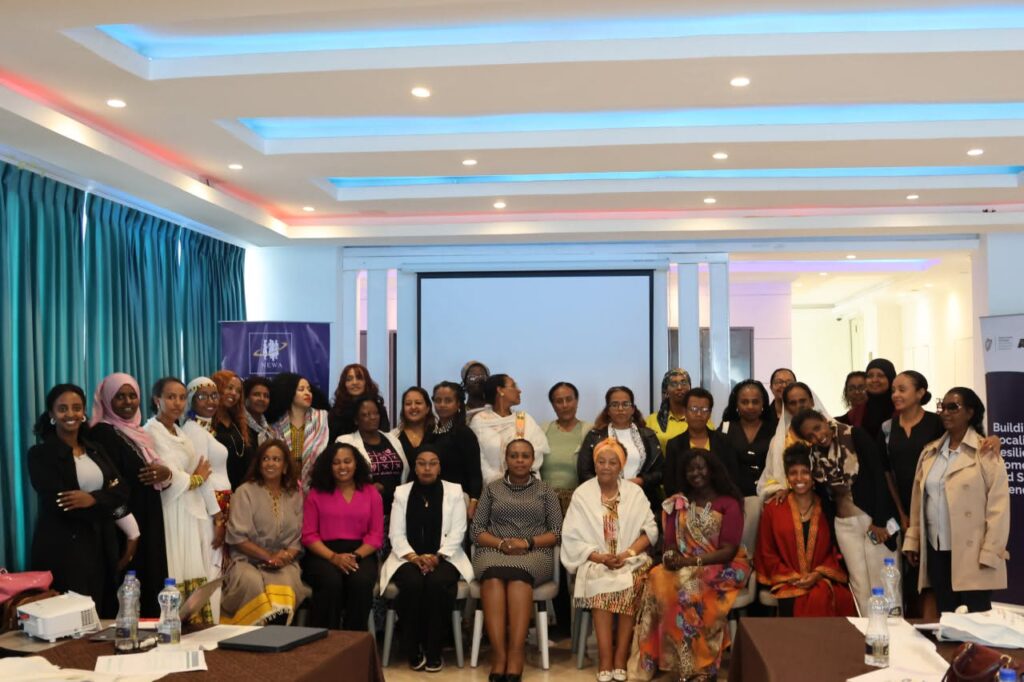
Author name: NEWA

Monitoring and Evaluation Officer (Open)

Monitoring and Evaluation Officer (Open) Job Code 105 Job/Position Title: Monitoring and Evaluation Officer Department: ProgrammeReport to: Programme ManagerJob Location: Addis Ababa with frequent travel to the fieldClothing Date : September 7, 2026 Job Purpose: The M&E Officer is responsible for strengthening and implementing NEWA’s Monitoring, Evaluation, accountability and learning systems across programmes and projects. The positions ensure that reliable, timely and quality data are generated, analyzed and used to track programme performance, demonstrate results, support evidence-based decision making, strengthen accountability and document learning. Key Responsibilities M&E System and Planning Develop, update and operationalize NEWA’s organizational M&E/MEAL framework. Support programmes and projects to develop logical frameworks, results frameworks, indicators, targets and monitoring plans. Ensure alignment between strategic objectives, annual plans, project plans, indicators and reporting requirements. Develop and maintain standardized M&E tools, SOPs, guidelines and reporting templates. Support integration of gender, inclusion, safeguarding and accountability considerations into M&E systems. Programme Monitoring Monitor implementation against approved workplans, indicators, targets, budgets and milestones. Conduct regular field monitoring and supportive supervision visits. Track programme performance and identify delays, gaps, risks and underachievement. Maintain organizational/project performance trackers and dashboards. Provide timely recommendations to programme teams for corrective action. Data Management and Quality Assurance Develop and manage appropriate data collection tools and databases. Ensure timely collection, compilation, cleaning, validation and analysis of programme data. Conduct routine Data Quality Assessments (DQAs). Ensure data are accurate, complete, consistent, reliable and properly documented. Strengthen digital data collection and information management systems. Evaluation and Research Support baseline, mid-term, end-line and other programme evaluations. Develop TORs and technical inputs for evaluations and research assignments. Support quantitative and qualitative data collection and analysis. Ensure evaluation findings and recommendations are documented and followed up. Generate evidence to inform programme design and strategic decision-making. Reporting and Analysis Prepare regular programme performance reports, including monthly, quarterly, biannual and annual reports. Provide data and analysis for donor reports, proposals, concept notes and organizational reports. Analyze trends, achievements, challenges and deviations against targets. Develop concise performance summaries, dashboards and visualizations for management. Learning and Knowledge Management Establish mechanisms for documenting lessons learned, best practices, success stories and case studies. Facilitate learning and reflection sessions with programme teams and partners. Promote the use of monitoring and evaluation findings for adaptive programme management. Contribute to organizational knowledge management and evidence generation. Capacity Building Build the capacity of programme staff, members, partners and sub-grantees on M&E, data collection, data quality, reporting and learning. Provide technical support to project teams in developing and using M&E tools. Coach data collectors and relevant programme staff on ethical and quality data collection. Accountability and Feedback Strengthen programme feedback and complaints mechanisms. Ensure beneficiary/community feedback is systematically collected, analyzed and used to improve programme quality. Coordination Work closely with the Programme, Finance, Communication, Resource Mobilization and other relevant units. Coordinate with project focal persons, members, partners and sub-grantees on M&E requirements. Support management in reviewing organizational and project performance. Represent NEWA in relevant M&E/MEAL coordination forums when assigned. Required Qualifications and Experience BA/MA in Monitoring and Evaluation, Statistics or a related field. At least 5 years of relevant M&E/MEAL experience, preferably in NGO/CSO or development programmes. Experience developing and implementing M&E frameworks and systems. Strong knowledge of quantitative and qualitative data collection and analysis. Experience with digital data collection and data management tools. Strong Excel and data visualization skills; knowledge of statistical software is an advantage. Experience in gender, women’s rights, GBV, advocacy, humanitarian or development programming is highly desirable. Excellent report writing, communication, facilitation and analytical skills. Key Competencies Results-based management Data analysis and interpretation Attention to detail and data quality Strategic thinking Problem solving Communication and facilitation Teamwork and coordination Learning and knowledge management Gender and inclusion sensitivity Confidentiality and ethical data management How to Apply Applicants should submit their CV and cover letter to the following email address; Network of Ethiopia Women’s Associations – Email  newarecruitments@gmail.com  Female applicants are highly encouraged to apply this is strongly encourage by NEWA. Only shortlisted candidates will be contacted.  

Monitoring and Evaluation Officer (Open) Read More »

Program Coordinator – ARISE Project (Open)

Program Coordinator – ARISE Project (Open) JOB DESCRIPTIONPosition Title: Program Coordinator – ARISE ProjectProject: ARISE – Integrated GBV Response and Social ReintegrationDepartment: Program DepartmentReports to: Program ManagerDuty Station: Addis Ababa, with frequent travel to South Wollo, Amhara RegionEmployment Type: Full-timeDue Date: Sept 7, 2026. Job PurposeThe Program Coordinator will provide overall strategic, technical, operational and coordination leadership for the ARISE Project. The position will ensure that the project is implemented effectively, efficiently and in accordance with the approved project proposal, logical framework, workplans, budget, donor requirements, consortium arrangements, NEWA policies, and relevant GBV standards. The Program Coordinator will provide technical and managerial support to the field team, coordinate with CARE Ethiopia, government institutions, service providers, women-led organizations and other stakeholders, and ensure that project interventions achieve their intended results. Key Responsibilities Overall Project Coordination and Management Provide overall coordination and oversight of the ARISE project. Coordinate implementation across Head Office and field teams. Ensure effective coordination between Program, M&E, Finance, Communication, Administration and other relevant NEWA units. Ensure effective linkages between ARISE and NEWA’s broader GBV, gender equality, women’s empowerment and advocacy priorities. Technical Leadership on GBV Programming Ensure project interventions comply with relevant GBV minimum standards, national frameworks, safeguarding requirements and humanitarian principles. Provide guidance on integrated GBV response, including medical, psychosocial, legal, protection and referral services. Ensure appropriate and functional referral mechanisms are established and strengthened from community/kebele to zonal level. Support the development and strengthening of partnerships with One Stop Centers, health facilities, legal service providers, safe spaces, and other relevant services. Provide technical oversight to community-based GBV prevention and social norm change interventions. Project Quality Assurance Establish and maintain mechanisms for ensuring the quality of project implementation. Review project plans, ToRs, training materials, tools, reports and other technical documents. Conduct regular field monitoring and supportive supervision visits. Support continuous improvement and adaptive management based on evidence and learning. Consortium and Partner Coordination Serve as a key focal person for coordination with CARE Austria, CARE Ethiopia and other ARISE partners. Ensure timely communication and information sharing between NEWA and consortium partners. Coordinate joint planning, monitoring, learning, reporting and review processes. Represent NEWA in relevant coordination meetings when delegated. Government and Stakeholder Engagement Establish and maintain strong working relationships with relevant government offices at regional, zonal, woreda and community levels. Coordinate with Women and Social Affairs, Health, Justice, Police, education, TVET and other relevant government institutions. Engage GBV service providers, women-led organizations, CSOs, community structures, academic institutions and other stakeholders. Represent NEWA in relevant GBV, protection, humanitarian and coordination platforms. Support advocacy and policy engagement related to GBV prevention, response, survivor rights and women’s empowerment. M&E, Accountability, Learning and Evidence Work closely with the M&E/MEAL team to ensure achievement of project indicators and targets. Ensure effective monitoring systems are established and implemented. Review project performance against the log frame, indicators, targets, and workplans. Promote accountability to project participants and communities. Lead periodic project performance reviews and support reflection and learning sessions. Document lessons learned, promising practices, success stories and case studies. Ensure learning is used to adapt project implementation and improve quality. Reporting and Documentation Coordinate preparation and submission of high-quality monthly, quarterly, biannual and annual project reports. Review and consolidate reports from field teams. Ensure reports clearly demonstrate progress against results, indicators, targets, challenges, lessons and corrective actions. Ensure proper documentation and archiving of project records. Coordinate development of success stories, case studies and other knowledge products. Budget and Financial Oversight Work closely with Finance to monitor ARISE project budget utilization. Ensure project activities are implemented within approved budgets. Review budget versus actual expenditure and identify variances. Ensure timely preparation of activity budgets, procurement plans, and financial requests. Ensure compliance with NEWA financial procedures and donor requirements. Resource Mobilization and Sustainability Identify opportunities for additional resources to strengthen and sustain ARISE interventions. Contribute to proposal development and concept note preparation related to GBV, women’s rights and survivor support. Support resource mobilization initiatives relevant to NEWA’s strategic priorities. Capacity Strengthening Lead identification of capacity gaps among service providers, government actors, community structures, women-led organizations and project staff. Coordinate development and delivery of capacity-building interventions. Support training and mentoring on GBV prevention and response, survivor-centered approaches, referral systems, safeguarding and related areas. Promote institutional and community ownership of project interventions. Safeguarding and Risk Management Ensure safeguarding, child protection, confidentiality and do-no-harm principles are integrated into all project activities. Ensure risks affecting project implementation are regularly identified, assessed, monitored and mitigated. Ensure safeguarding concerns are handled according to NEWA’s established reporting and response mechanisms. Required Qualifications and Experience EducationMaster’s degree in Gender Studies, Social Work, Sociology, Psychology, Public Health, Development Studies, International Development, or a closely related field. Experience At least 7 years of relevant professional experience, including significant experience in program/project coordination or management. Demonstrated experience managing or coordinating GBV, women’s rights, protection, humanitarian, gender equality, or social reintegration programs. Experience working with international NGOs, donors, consortiums and government stakeholders. Strong experience in project planning, implementation, monitoring, reporting and budget management. Experience in GBV survivor-centered programming, referral mechanisms, women’s economic empowerment, or community-based GBV prevention is highly desirable. Experience in conflict-affected and humanitarian settings is an advantage. Language Excellent written and spoken English and Amharic. How to Apply Applicants should submit their CV and cover letter to the following email address; Network of Ethiopia Women’s Associations – Email  newarecruitments@gmail.com before Sept 7, 2026. Female applicants are highly encouraged to apply this is strongly encourage by NEWA. Only shortlisted candidates will be contacted.  

Program Coordinator – ARISE Project (Open) Read More »

Project Coordinator – Civil Society Innovation Fund (CSIF) (Open)

Project Coordinator – Civil Society Innovation Fund (CSIF) (Open) JOB DESCRIPTIONPosition Title: Project Coordinator – Civil Society Innovation Fund (CSIF)Project: Civil Society Innovation Fund (CSIF)Department: Program Department Reports to: Program ManagerDuty Station: Addis Ababa, Ethiopia, with frequent travel to project regionsEmployment Type: Full-timeDue Date: Sept 7, 2026 Job PurposeThe Project Coordinator will be responsible for the day-to-day coordination and effective implementation of the CSIF-supported WLO (Women Led Organizations) Initiative. The position will coordinate NEWA and its members/partners to ensure that project activities are implemented on time, within budget and in accordance with the approved proposal, workplan, results framework, donor requirements and NEWA policies and procedures. The position will contribute to strengthening women-led and women-focused organizations and promoting the meaningful participation of women, youth, persons with disabilities and other marginalized groups in civic engagement, governance, advocacy, peacebuilding and decision-making processes. Key Responsibilities Project Planning and Implementation Coordinate the overall day-to-day implementation of the CSIF project in line with the approved proposal, workplan, budget and results framework. Ensure that project activities are implemented according to agreed quality standards, timelines and targets. Identify implementation challenges and opportunities and recommend appropriate corrective actions. Ensure gender equality, social inclusion, disability inclusion, safeguarding, conflict sensitivity and do-no-harm principles are integrated throughout project implementation. Support adaptive implementation based on changes in context, emerging needs, monitoring findings and stakeholder feedback. Capacity Strengthening of Women-Led Organizations Coordinate Organizational Capacity Assessments (OCAs) of selected women-led and women-focused organizations. Support the development and implementation of tailored organizational capacity-strengthening plans. Support WLOs to strengthen their organizational systems, leadership, advocacy, evidence generation, monitoring, safeguarding and resource mobilization capacities. Advocacy, Civic Engagement and Peacebuilding Coordinate evidence-based advocacy and civic engagement initiatives under the project. Facilitate engagement between women-led organizations, communities, government institutions, civil society, media and other stakeholders. Support initiatives that promote women’s meaningful participation in governance, peacebuilding, policy dialogue and decision-making. Ensure the priorities and voices of women, youth, persons with disabilities and other marginalized groups are reflected in project activities. Coordinate the development and dissemination of policy briefs, research findings, advocacy materials and other knowledge products. Grants and Partner Support Coordinate project-related grant activities in collaboration with the finance and relevant technical teams. Support the preparation and implementation of grant-making processes in line with approved procedures. Provide technical accompaniment to grant recipients and monitor implementation progress. Review partner activity and narrative reports and provide feedback for improvement. Ensure grant-related documentation is complete and properly maintained. Coordinate with finance staff to monitor grant expenditure and identify financial implementation issues. Monitoring, Evaluation, Accountability and Learning Work closely with the MEAL/M&E team to track project progress against the results framework and indicators. Ensure timely collection and documentation of project data and evidence. Participate in joint monitoring visits, data quality assessments, outcome reviews and reflection meetings. Support documentation of success stories, lessons learned, good practices, outcome stories and case studies. Reporting and Documentation Prepare and coordinate timely project narrative and progress reports in collaboration with relevant staff and consortium partners. Consolidate partner reports and ensure consistency between activities, results, indicators and expenditure. Ensure project documents, evidence, correspondence and reports are properly organized and centrally accessible. Financial and Budget Monitoring Work closely with the Finance team to monitor project expenditure against the approved budget. Ensure activities are planned and implemented within approved budgets. Coordinate with finance and procurement teams to avoid delays in implementation. Ensure compliance with NEWA and donor financial and procurement procedures. Risk Management, Safeguarding and Compliance Maintain and regularly update the project risk register in collaboration with consortium partners. Ensure agreed risk mitigation measures are followed and updated as necessary. Promote conflict-sensitive and do-no-harm programming. Ensure safeguarding, protection, accessibility, gender equality and social inclusion standards are applied in project activities. Stakeholder Engagement and Representation Develop and maintain effective relationships with government institutions, CSOs, WLOs, community structures, media, development partners and other stakeholders. Represent NEWA/CSIF project in relevant meetings, workshops, coordination forums and stakeholder engagements as delegated. Support national and regional advocacy and policy dialogue platforms. Strengthen linkages between project activities and existing women’s rights, peacebuilding, civic engagement and civil society networks. Promote visibility and positive communication of project achievements in line with donor and NEWA requirements. Required Qualifications and Experience EducationMaster’s degree in Development Studies, Gender Studies, Social Sciences, Public Administration, Project Management, International Development, Peace and Conflict Studies, or a related field. Experience Minimum of 7 years of relevant experience in project/program coordination or management, preferably within civil society, women’s rights, gender equality, governance, peacebuilding, or development programs. Demonstrated experience coordinating projects involving multiple partners or consortium arrangements. Experience working with women-led/women-focused organizations and marginalized groups is highly desirable. Experience in advocacy, civic engagement, policy influencing, peacebuilding, or organizational capacity strengthening. Experience in donor-funded project implementation and reporting. Experience working with grants and providing technical support to partner organizations is an advantage. Experience in Ethiopia’s civil society and development sector is preferred. LanguageExcellent written and spoken English and Amharic How to Apply Applicants should submit their CV and cover letter to the following email address; Network of Ethiopia Women’s Associations – Email  newarecruitments@gmail.com before Sept 7, 2026. Female applicants are highly encouraged to apply this is strongly encourage by NEWA. Only shortlisted candidates will be contacted.

Project Coordinator – Civil Society Innovation Fund (CSIF) (Open) Read More »

Powerful Community Mobilization Caravan Sweeps Fentale Woreda to End FGM, Child Marriage, and Violence Against Children

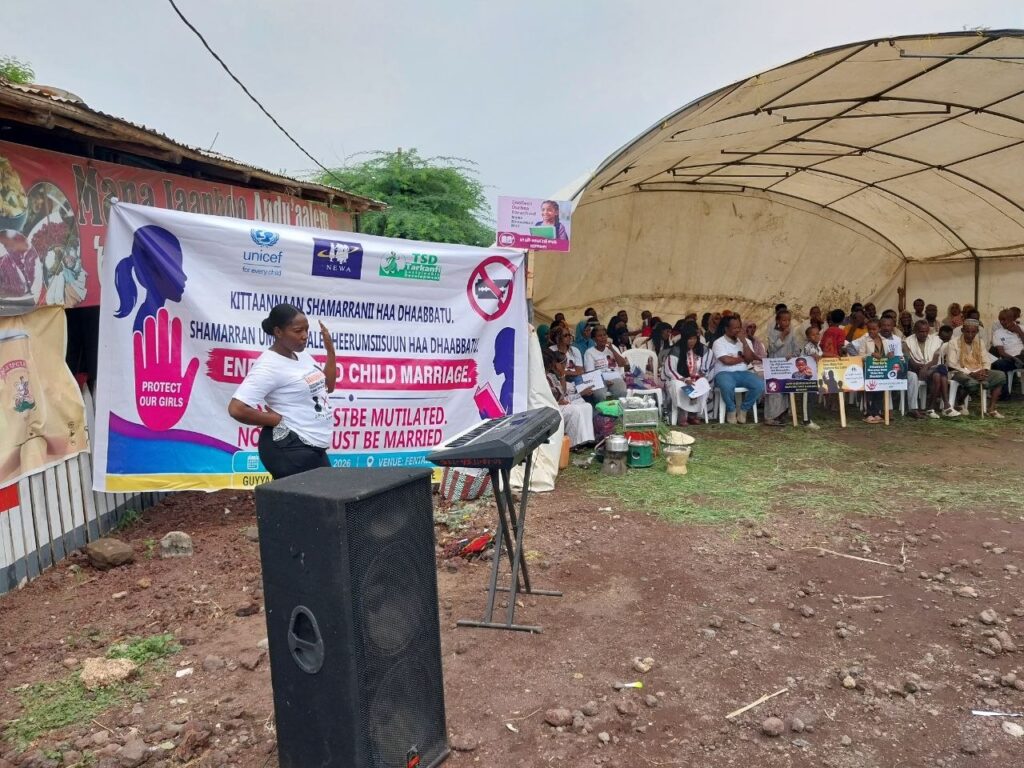
Powerful Community Mobilization Caravan Sweeps Fentale Woreda to End FGM, Child Marriage, and Violence Against Children https://newaethiopia.org/wp-content/uploads/2026/08/video_2026-08-24_22-25-14.mp4 FENTALE WOREDA, ETHIOPIA — In a resounding collective stand for human rights, gender equality, and child protection, over 5,000 community members were reached today during a high-impact, public mobilization caravan across Fentale Woreda in the East Shewa Zone of the Oromia region. The event was spearheaded by the Network of Ethiopian Women’s Associations (NEWA) in close collaboration with Tarkanfi Sustainable Development (TSD) and the Fentale Woreda Women and Social Affairs Office. This initiative is part of the broader project titled “Empowering Women-Led Associations and Community Structures to End FGM, Child Marriage, and Violence Against Children,” generously funded by UNICEF Ethiopia. A Convergence of Culture, Leadership, and Advocacy The day opened with traditional blessings from Oromo Aba Gadaa elders and energetic musical performances by local youth bands, setting an inspiring, culturally resonant tone for the mobilization. Key leaders and stakeholders delivered passionate opening addresses emphasizing unity and sustainable social change: Worknesh Begi, Executive Directress of Tarkanfi Sustainable Development (TSD), reaffirmed her organization’s unwavering commitment to dismantling harmful traditional practices (HTPs)—specifically Female Genital Mutilation (FGM) and Child Marriage (CM)—through direct grassroots engagement. Saba Gebremedhin, Executive Directress of NEWA, highlighted NEWA’s long-standing dedication to advancing gender equality, combating Gender-Based Violence (GBV), and eradicating HTPs across Ethiopia. She extended deep gratitude to the local community, government stakeholders, religious and traditional leaders, and funding partner UNICEF Ethiopia for their steadfast support. Key speeches were also delivered by the Fentale Woreda Administrator, the Woreda Women and Social Affairs Office Head, local Hadha Siiqqee (Oromo women leaders), and Aba Gadaa** elders, all pledging unified institutional and traditional alignment against child abuse and early marriage. Dynamic Public Outreach & Edutainment Across Kebeles The mobilization blended rich cultural traditions with interactive Social and Behavioral Change Communication (SBCC) tools: Cultural & Creative Arts: The gathering featured traditional coffee ceremonies, symbolic bread cutting, educational drama, poetry recitations, and live music designed to spark dialogue and challenge harmful social norms. Mobile Sound & Caravan Outreach: Vehicles equipped with banners, anti-FGM/CM placards, and high-powered Montarbo loudspeakers traversed multiple villages and Kebeles across Fentale Woreda. The mobile units brought critical awareness, legal referral details, and protection messages directly to thousands of residents. SBCC Materials: Attendees and youth facilitators were outfitted with printed campaign T-shirts, informative brochures, placards, and visibility banners to maximize campaign engagement and message retention. Unyielding Community Commitment The mobilization concluded on a historic note, as local administrative authorities, traditional leaders, and community members forged a common stance to eliminate FGM and child marriage. The event officially closed with sacred blessings and commitment pledges from traditional elders, followed by concluding remarks from the Fentale Woreda Women and Social Affairs Office. Through vehicle-supported public outreach and widespread distribution of SBCC materials, the joint initiative successfully reached more than 5,000 individuals in a single day—marking a major milestone in strengthening grassroots protection networks for women and children in Oromia. photo_2026-08-17_02-22-52 photo_2026-08-17_13-39-59 (2) photo_2026-08-17_13-39-59 photo_2026-08-17_13-40-01 photo_2026-08-24_22-24-07

Powerful Community Mobilization Caravan Sweeps Fentale Woreda to End FGM, Child Marriage, and Violence Against Children Read More »

Strengthening Staff Well-being Through Mental Health and Psychosocial Support (MHPSS)

Strengthening Staff Well-being Through Mental Health and Psychosocial Support (MHPSS) With the support of the Malala Fund, NEWA successfully conducted a Mental Health and Psychosocial Support (MHPSS) training for its staff on August 1, 2026, at Nora Resort, Bishoftu.The training aimed to strengthen staff understanding of mental health and psychosocial support, enhance self-awareness, and equip participants with practical strategies to promote their well-being in both their professional and personal lives. Through interactive discussions, practical exercises, and reflective sessions, participants explored stress management techniques, self-care practices, psychological resilience, and approaches to fostering a healthy and supportive workplace.The training provided a refreshing and enriching experience, allowing staff to reconnect, reflect on their well-being, and recognize the importance of prioritizing mental health while delivering quality services to communities. It also reinforced NEWA’s commitment to creating a supportive work environment where staff well-being is valued as an essential component of organizational effectiveness. photo_2026-08-07_05-01-07 photo_2026-08-07_05-01-27 photo_2026-08-07_05-01-56 photo_2026-08-07_05-02-11 photo_2026-08-07_05-02-25 photo_2026-08-07_05-02-55 photo_2026-08-07_05-03-45 (2) photo_2026-08-07_05-03-54 photo_2026-08-07_05-03-57

Strengthening Staff Well-being Through Mental Health and Psychosocial Support (MHPSS) Read More »

Cultural Caravan Rallies Jigjiga Against Harmful Practices

Cultural Caravan Rallies Jigjiga Against Harmful Practices https://newaethiopia.org/wp-content/uploads/2026/08/video_2026-08-07_11-46-06.mp4 Jigjiga, Somali Region – July 25, 2026 — The Network of Ethiopian Women’s Associations (NEWA), in partnership with UNICEF, successfully launched a high-impact Community Caravan and Cultural Performance outreach in Jigjiga. The initiative brought together local residents, youth, and leaders to drive action against Female Genital Mutilation (FGM), child marriage, and violence against children across the region.By combining live cultural entertainment with targeted advocacy, the event created an engaging public forum designed to address deeply rooted social norms through open dialogue.Fusing Tradition with AdvocacyThe caravan’s success hinged on a dynamic mix of live music and traditional Somali dances. These performances celebrated the region’s rich artistic heritage while creating a welcoming environment for honest conversations on challenging topics. The live cultural displays drew large crowds, maintaining high energy throughout the day and ensuring core human rights messages resonated in a culturally grounded, accessible way.To reinforce the event’s core message, NEWA deployed a comprehensive visual strategy:• Custom T-shirts carrying clear advocacy messages were worn by staff, religious leaders, women, youth, and community members.• Strategic placement of placards and banners around Jigjiga ensured key messages were unmissable.• Informational brochures detailing the health, social, and legal consequences of FGM and early marriage were distributed directly to attendees.This multi-layered approach engaged both active event participants and passersby, turning public spaces in Jigjiga into active hubs for community advocacy. The event also achieved wide reach through live broadcasts on Somali Regional TV and digital streaming across YouTube, Facebook, and NEWA’s social media platforms.The Global and Local ImperativeGlobally, more than 230 million girls and women have undergone FGM, with over 2 million young girls subjected to the practice each year before their fifth birthday. Concurrently, 650 million women worldwide were married as children, including over 50 million in Eastern and Southern Africa. To eliminate these practices by 2030 in line with Sustainable Development Goal (SDG) Target 5.3, the global pace of progress must accelerate dramatically.While Ethiopia has made notable progress over the past two decades, national data often masks significant regional variations. Girls across different zones face distinct risks based on local social dynamics, economic pressures, and humanitarian conditions.Because harmful practices are sustained by social expectations and gender inequality, ending them requires shifting community norms at every level.A Movement Driven by Women-Led ActionSustainable change relies on building grassroots coalitions that empower communities to reject harmful practices. The Network of Ethiopian Women’s Association recognized for its extensive network of 55 member organizations across federal and regional levels, NEWA was selected to lead this movement in collaboration with the Ministry of Women and Social Affairs (MoWSA), regional BoWSAs, and UNICEF support.Drawing on over two decades of advocacy—including leading the landmark national Gender-Based Violence (GBV) Campaign established in 2006—NEWA utilizes a socio-ecological approach to mobilize community influencers, religious leaders, youth, and local organizations.Through ongoing regional caravans, technical guidance, and direct community engagement, NEWA and its partners continue to build momentum toward a safer, more equitable future for every girl and woman in Ethiopia.Relevant Hashtags#EndFGM #EndChildMarriage #ProtectTheGirlChild #SomaliRegion #NEWAEthiopia #UNICEF #HerVoiceHerFuture #16DaysOfActivism #GenderEquality #Ethiopia photo_2026-07-25_01-50-54 photo_2026-07-27_13-29-46 photo_2026-08-05_18-44-54 photo_2026-08-05_18-44-55 (2) photo_2026-08-05_18-44-55 photo_2026-08-05_18-44-56 (2) photo_2026-08-05_18-44-56 photo_2026-08-05_18-44-57 (2) photo_2026-08-05_18-44-57 photo_2026-08-05_18-44-58 (2) Load More End of Content.

Cultural Caravan Rallies Jigjiga Against Harmful Practices Read More »

Strengthening Partnerships to Advance Girls’ Education

Strengthening Partnerships to Advance Girls’ Education On July 25, 2026, with the support of the Malala Fund, NEWA successfully established the Regional Coalition to advocating girls education and Safe Schools in Tigray region, Mekelle City.The coalition was established to create a sustainable multi-stakeholder platform that advances girls’ education and promotes safe, and protecting schools for all children, particularly girls. It aims to strengthen collaboration, coordination, and collective advocacy for the endorsement and implementation of the Safe Schools Declaration (SSD) across the region.The coalition brings together representatives from regional government bureaus, civil society organizations (CSOs), and other key stakeholders, who share a common commitment to protecting education and ensuring that every child—especially girls—can learn in a safe and supportive environment.During the establishment meeting, participants discussed the coalition’s objectives, roles, and collaborative approaches to promoting the Safe Schools.The establishment of the Regional Safe Schools Coalition marks a significant milestone in NEWA’s ongoing efforts, to strengthen local ownership and foster strategic partnerships on advancing Girls Education. 0Q6A0476 0Q6A0488 0Q6A0490 0Q6A0494 0Q6A0557 0Q6A0560 0Q6A0579 0Q6A0589 0Q6A0593 0Q6A0602 Load More End of Content.

Strengthening Partnerships to Advance Girls’ Education Read More »

Promoting the Safe Schools Declaration (SSD) in Tigray Region

Promoting the Safe Schools Declaration (SSD) in Tigray Region Partnership with the Malala Fund, NEWA remains committed to advancing girls’ education and advocating the endorsement and implementation of the Safe Schools Declaration (SSD), contributing every girl in conflict-affected regions of Ethiopia has access to safe, inclusive, and quality education.On July 24, 2026, NEWA successfully conducted a Safe Schools Declaration (SSD) Training in Mekelle City, Tigray Region, at Amdina Hotel.The training aimed to strengthen the capacity of government institutions and key stakeholders to promote Safe Schools Declaration (SSD), contributing to safer, more inclusive, and protective learning environments for all children—particularly girls in conflict-affected areas.The session brought together representatives from regional government bureaus, civil society organizations (CSOs), and community-based organizations (CBOs), providing a platform for collaboration, knowledge sharing, and collective action to protect education.The training also strengthened partnerships among key stakeholders, reinforcing a shared vision of ensuring that schools remain places of safety, learning, and hope. 0Q6A0281 0Q6A0305 0Q6A0308 0Q6A0411 0Q6A0414 0Q6A0419 0Q6A0423 0Q6A0435 0Q6A0448 0Q6A0462

Promoting the Safe Schools Declaration (SSD) in Tigray Region Read More »

Empowering Girls to Champion Safe Schools and Human Rights in Tigray

Empowering Girls to Champion Safe Schools and Human Rights in Tigray NEWA successfully conducted a Safe Schools and Human Rights Training for adolescent girls from Mekelle and Adigrat in Mekelle City in July 23, 2026 at Amdina Hotel.The training aimed to strengthen girls’ knowledge and understanding of the Safe and Protective Schools, international human rights standards, and the fundamental rights of girls to education, protection, participation, and dignity. Through interactive discussions and learning sessions, girls enhanced their capacity to recognize their rights, advocate for safe and inclusive learning environments, and become active voices for positive change within their schools and communities.The training brought together girls from diverse backgrounds, including girls with disabilities and internally displaced persons (IDPs), fostering an inclusive and supportive learning environment. It provided a safe space for participants to share their experiences, learn from one another, strengthen their understanding of their rights, and build solidarity across different communities. Their active engagement and commitment demonstrated the vital role girls play in promoting safe, inclusive, and rights-based education.NEWA remains committed to advancing girls’ education and ensuring that every girl can learn in a safe, protective, and empowering environment. Together, we can build safer schools where every girl can learn, thrive, and lead. 0Q6A0268 0Q6A0031 0Q6A0050 0Q6A0071 0Q6A0090 0Q6A0094 0Q6A0102 0Q6A0201 0Q6A0207 0Q6A0219 Load More End of Content.

Empowering Girls to Champion Safe Schools and Human Rights in Tigray Read More »

NEWA Hands Over Women and Girls Safe Space in Hagereselam to Strengthen GBV Response

NEWA Hands Over Women and Girls Safe Space in Hagereselam to Strengthen GBV Response On Friday, 24 July 2025, the Network of Ethiopian Women’s Associations (NEWA) officially handed over a newly established and partially furnished Women and Girls Safe Space (WGSS) in Hagereselam, Tigray Region. The safe space marks an important milestone in strengthening protection and support services for survivors of gender-based violence (GBV), conflict-related sexual violence (CRSV), and women and girls in the community. The safe space provides a secure, accessible, and confidential environment where women and girls can receive psychosocial support, case management, information, referrals, and empowerment services. In addition to constructing the facility, NEWA provided essential furniture and equipment to support quality, survivor-centered service delivery. The handover ceremony was led by Mrs. Saba G/Medhin, Executive Directress of NEWA, who officially transferred the safe space and its equipment to the Hagereselam Women Affairs Office. The facility was formally received by Mrs. Grimawit Fitsum, head of the Hagereselam Women Affairs Office, who reaffirmed her office’s commitment to managing the center effectively and ensuring quality services for women and girls. In her remarks, Mrs. Saba reaffirmed NEWA’s unwavering commitment to the prevention of and response to GBV and CRSV. She highlighted NEWA’s contribution, alongside Ethiopian peace builders and the Ethiopian Peace Table, to advancing sustainable peace and protecting women and girls during conflict. While celebrating the establishment of the safe space, she emphasized that much more remains to be done to address the needs of survivors and vulnerable women and girls. Mrs. Grimawit Fitsum expressed her appreciation for NEWA’s support and highlighted the social and economic challenges facing women and girls in Hagereselam. She called for greater investment in livelihood and economic empowerment programs to help women rebuild their lives with dignity and resilience. Dr. Kiros Yirga, Medical Director of Hagereselam Primary Hospital, highlighted the importance of integrated services for survivors and emphasized the need for additional medical equipment, medicines, and other essential supplies to strengthen healthcare services for the community. NEWA extends its sincere appreciation to Hagereselam Primary Hospital for providing land within its compound for the construction of the safe space and for serving as a key referral partner for survivors. We also express our heartfelt gratitude to the United Nations Trust Fund to End Violence against Women (UNTF) for its generous financial support and to the Rise and Shine Women Empowerment Center for its valuable partnership and technical support in successfully establishing the safe space. The successful handover reflects the strong collaboration between government institutions, healthcare providers, civil society organizations, and development partners in advancing survivor-centered services. NEWA remains committed to expanding protection, recovery, and empowerment opportunities so that every woman and girl can live in safety, dignity, and hope. Together, let us continue investing in protection, justice, healing, and economic empowerment for women and girls. Every contribution brings us one step closer to ending violence against women and girls. 0 002 001 003 005 004 WhatsApp Image 2026-07-27 at 3.23.27 PM 0Q6A0323 006 0Q6A0331 Load More End of Content.

NEWA Hands Over Women and Girls Safe Space in Hagereselam to Strengthen GBV Response Read More »