News

NEWA Supports Werebabo Safe Space to Strengthen Survivor-Centred Services for Women and Girls

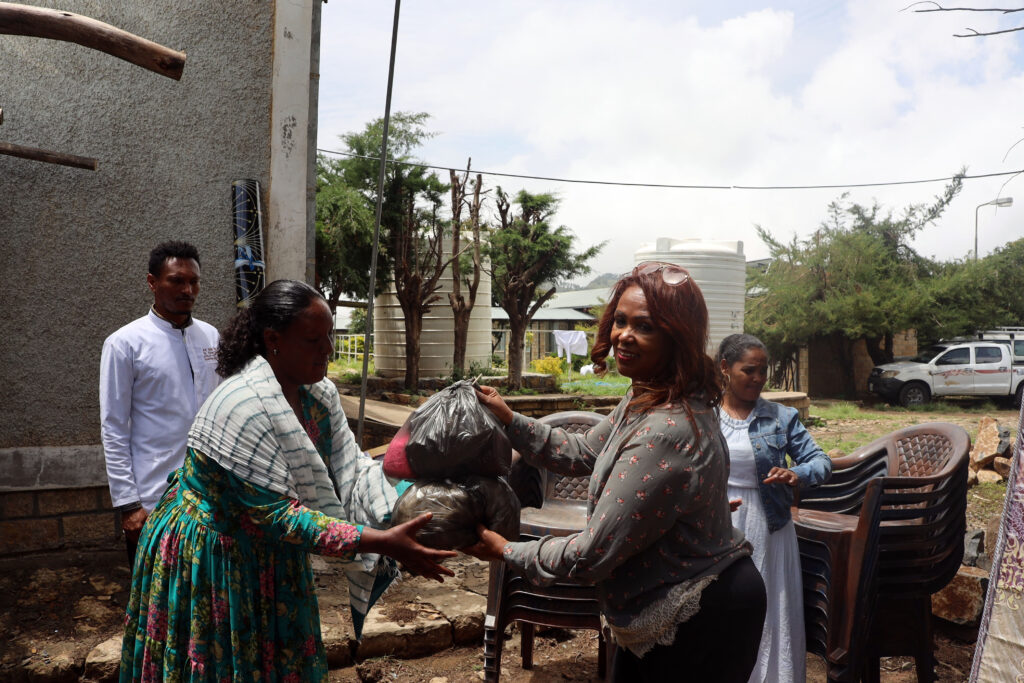
NEWA Supports Werebabo Safe Space to Strengthen Survivor-Centred Services for Women and Girls On September 17, 2026, the Network of Ethiopian Women’s Associations (NEWA), with financial support from the United Nations Trust Fund to End Violence against Women (UNTF), provided demand-driven material support to the women and girls’ safe space in Werebabo, South Wollo Zone, to improve the delivery of survivor-centred services. The support aims to create a more comfortable, confidential and welcoming environment where survivors can access psychosocial support, participate in healing sessions, build self-esteem and resilience, and strengthen their ability to cope with the effects of violence and reintegrate into their communities. The materials provided include a television and accessories, mat, mattresses, blankets, bed sheets, pillow, chairs, tables, first-aid kits, sanitary pads, traditional Ethiopian coffee-making equipment, and a lockable filing cabinet to ensure the confidential storage of survivors’ records, alongside other essential supplies. By strengthening the safe space’s facilities, NEWA seeks to support the provision of dignified, confidential, and survivor-centred services that promote survivors’ well-being, recovery, and resilience. A safe and supportive space is an important step toward healing, rebuilding confidence and restoring hope. 0Q6A0383 0Q6A0373 0Q6A0393 0Q6A0406 0Q6A0391 0Q6A0387 0Q6A0384 0Q6A0379 0Q6A0378 0Q6A0363 Load More End of Content.

NEWA Supports Werebabo Safe Space to Strengthen Survivor-Centred Services for Women and Girls Read More »

Experience Sharing to Strengthen Women’s Role in Peacebuilding

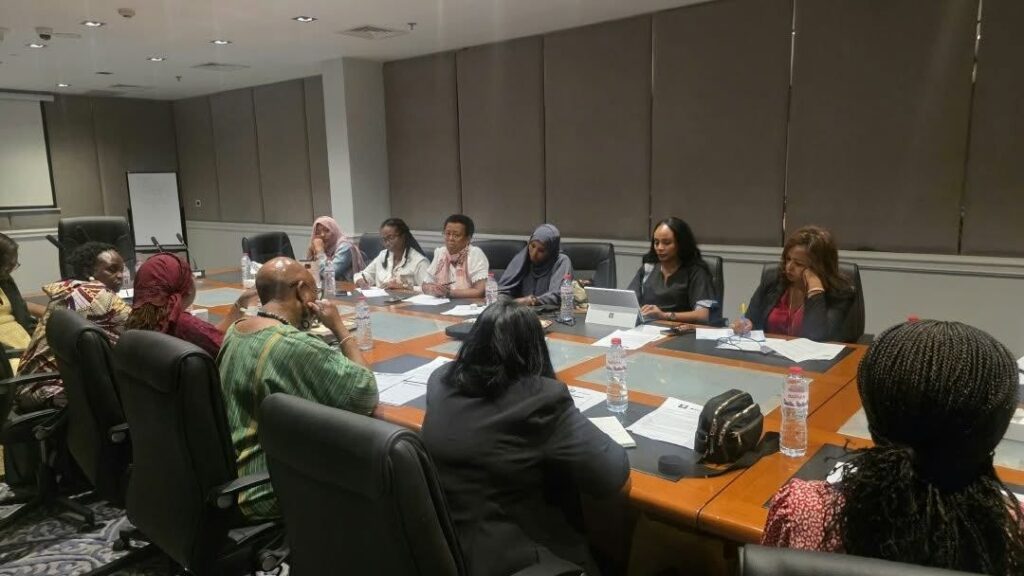
Experience Sharing to Strengthen Women’s Role in Peacebuilding On the margins of the 8th GIMAC Network CSOs–RECs Coordination Meeting, the Network of Ethiopian Women’s Associations (NEWA) and the Ethiopian Women’s Peace Table, in partnership with ACCORD and with financial support from the Government of Ireland, brought women #peacebuilders together for an experience-sharing and learning exchange on what it takes to sustain women’s meaningful participation in peace processes.The exchange provided a valuable space for women peacebuilders to share experiences, reflect on lessons learned, identify practices that can be adapted and carried forward, and discuss challenges that require collective attention. Sharing experiences. Building solidarity. Sustaining women’s meaningful participation in peace. 831492650_1112458461144861_1272997360405090867_n 830349655_1112458394478201_251635079733272888_n 828710998_1112458351144872_5428050069828368624_n 830572522_1112458367811537_5802318946462283958_n 828443430_1112456574478383_6684417977979809436_n 829631424_1112456701145037_3870918030308294653_n 830594075_1112456357811738_280737467107781252_n 830669032_1112456874478353_3763254192538750947_n 833862495_1112455277811846_3741522389714431480_n

Experience Sharing to Strengthen Women’s Role in Peacebuilding Read More »

Stakeholders Co-Create Practical Solutions to Reduce Unpaid Care and Domestic Work in Addis Ababa and Oromia

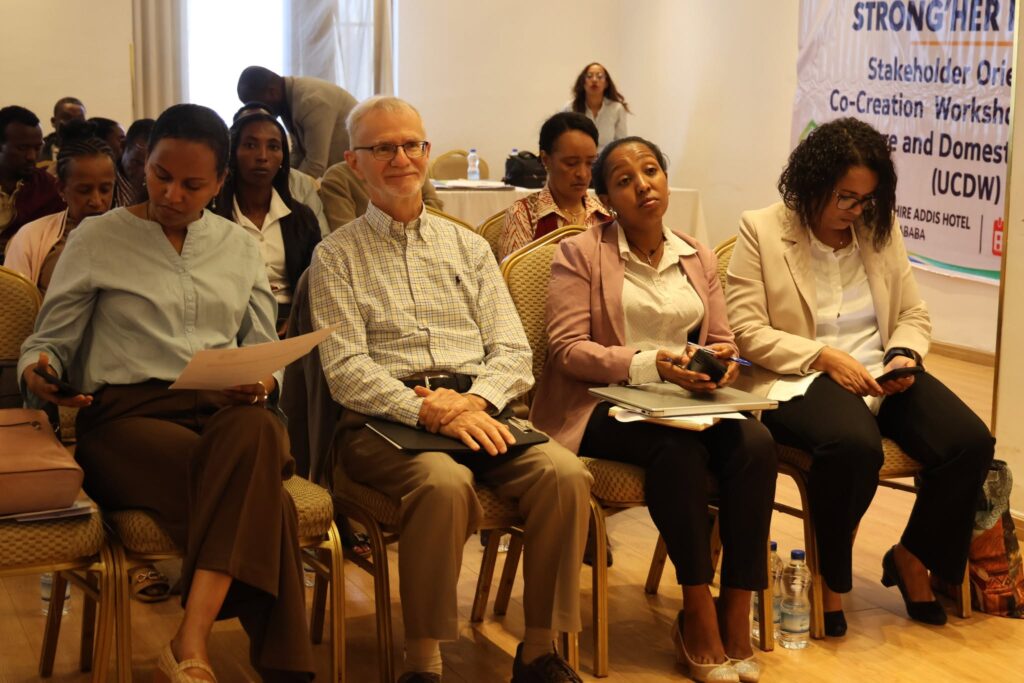
Stakeholders Co-Create Practical Solutions to Reduce Unpaid Care and Domestic Work in Addis Ababa and Oromia Addis Ababa, Ethiopia | 29–30 September 2026A two-day participatory workshop on Unpaid Care and Domestic Work (UCDW) successfully convened 71 participants at the Sapphire Addis Hotel in Addis Ababa on 29–30 September 2026. Organized jointly by the Network of Ethiopian Women’s Associations (NEWA) and SOCODEVI under the STRONG’HER Project, the workshop served as a vital collaborative platform to identify practical, locally driven solutions for reducing the heavy time and labor burdens that unpaid care and domestic responsibilities place on women and families. The workshop brought together a diverse group of key stakeholders representing regional governance, grassroots communities, and national development partners: Local Administrations and Woredas: Representatives from five target woredas—Lume, Ambo, Ejere, Wolmera, and Toke Kutaye—alongside Addis Ababa City Administration bureaus. Government Ministries: Delegates from the Ministry of Agriculture (MoA) and the Ministry of Women and Social Affairs (MoWSA). Civil Society and Cooperatives: NEWA, SOCODEVI, the STRONG’HER Project, ERSHA, Melka Ethiopia, the Ambo Farmers’ Union, and the Lume-Adama Farmers’ Union. Designed as an action-oriented platform, the event deliberately moved beyond discussing the challenges of UCDW toward identifying feasible interventions, clear institutional responsibilities, and practical actions implementable at both woreda and sector levels. Opening and Welcome Remarks The event commenced with welcoming remarks delivered by Yididya Abebe on behalf of Wro. Saba G/Medhin, Executive Directress of NEWA. The address welcomed attendees, outlined the core workshop objectives, and emphasized the critical necessity of collective action to ease the care burden. Opening remarks were also delivered by SOCODEVI Country Director Mario Boivin, who highlighted SOCODEVI’s work in partnership with Global Affairs Canada, underscored the strong collaboration behind the STRONG’HER Project, and stressed the urgency of transforming shared understandings into concrete, localized interventions. Technical Foundations: From Understanding the Burden to Identifying Solutions The technical sessions opened with an introduction to the SOCODEVI STRONG’HER Project by SOCODEVI Deputy Directress Alemtsehay Ejigu, who framed the initiative’s overarching goals for women’s economic empowerment. NEWA Program Officer Desalegn Terecha Edea then led a comprehensive session on UCDW and the 5Rs Framework (Recognize, Reduce, Redistribute, Reward, and Represent). Presenting localized time-poverty data from Addis Ababa and the five woredas, the session vividly demonstrated how unpaid care obligations restrict women’s access to economic and social opportunities. A lively question-and-answer session followed. Collaborative Time-Use Diary ExerciseFacilitated by the joint NEWA and SOCODEVI team, participants engaged in a hands-on time-use diary exercise. This comparative analysis mapped out how household and care responsibilities are distributed across urban, peri-urban, and agrarian settings, highlighting stark gender disparities and pinpointing where the heaviest household burdens lie. Breakout Sessions and Leverage Point MappingOrganized into dedicated woreda and sector groups, participants mapped critical leverage points influencing the distribution of unpaid care work: Water Access and Infrastructure: Evaluating collection times and service reliability.Energy Alternatives: Expanding improved cooking technologies to minimize domestic labor.gricultural Innovations: Introducing labour-saving equipment, such as threshers, to ease agricultural workloads.Childcare and Community Services: Exploring early childhood care and education frameworks. Institutional Support: Integrating Health Extension Workers (HEWs) and strengthening municipal backing. Social Norms: Fostering men’s participation and community-based support systems. A robust plenary synthesis—facilitated to bridge community needs with institutional capabilities. Discussions rigorously evaluated proposed interventions by addressing feasibility, piloting potential, long-term ownership, maintenance, financing, accountability, and scalability. Co-Creating Woreda and Sector-Level Actions Day two shifted the focus decisively from analysis to actionable strategy. Working in thematic and geographic groups, participants designed contextualized solutions: Ambo, Toke Kutaye, Wolmera, and Ejere: Focused on labour-saving agricultural technologies and enhanced peri-urban service access. Lume: Designed industrial public-private partnership (PPP) childcare models.Addis Ababa: Formulated robust municipal integration frameworks. Teams refined and costed these low-cost solutions to ensure they could be effectively piloted within the STRONG’HER project budget. Proposals were tied to clear institutional roles, designated beneficiaries, and measurable UCDW indicators. The groups presented their models in a plenary session, receiving structured feedback from regional Bureau of Women, Children and Youth Affairs (BoWCYA) and municipal representatives to cross-pollinate best practices. Rather than developing isolated interventions, participants emphasized how government bodies, communities, service providers, farmers’ organizations, and civil society must unite to build sustainable solutions. Turning Ideas into 90-Day ActionA defining hallmark of the workshop was its commitment to practical, time-bound execution. Rather than remaining static recommendations, the action-planning process established concrete 90-day steps across water access, clean energy, climate-resilient agricultural technologies, childcare services, and institutional coordination. This approach ensures that proposed interventions evolve into locally owned actions backed by solid partnerships, defined implementation responsibilities, and measurable results. Strengthening Collaboration for ChangeThe multi-sectoral participation of government institutions, woredas, farmers’ unions, civil society, and development partners demonstrated that reducing UCDW requires coordinated action across infrastructure, agriculture, energy, childcare, local governance, social norms, and community systems rather than a single isolated intervention. The workshop concluded by the closing remark of Senait Endale, SOCODEVI GENDER SPECIALIST with an evaluation, final reflections, and official closing remarks by NEWA and SOCODEVI leadership, following the formal adoption of monitoring indicators and institutional roles for the upcoming pilot phases. The journey from dialogue to action has truly begun—driven by locally identified priorities, practical solutions, and stronger institutional partnerships among the communities and institutions that can make change happen.#CoCreation #LocalAction #InclusiveDevelopment #SocialTransformation 838698932_1116324904091550_5046832609111388550_n 838698930_1116324890758218_3186245891257550459_n 837494599_1116324980758209_5796674969440585450_n 837061145_1116324947424879_868268810508595924_n 835757052_1116324804091560_9213804483743069581_n 835640453_1116324914091549_5650524620146733827_n 833895199_1116324854091555_1845880858450391427_n 833779827_1116324857424888_1649095511384022824_n

Stakeholders Co-Create Practical Solutions to Reduce Unpaid Care and Domestic Work in Addis Ababa and Oromia Read More »

NEWA and UNICEF Honor Community Champions Leading the Fight to End FGM and Child Marriage in Ethiopia

NEWA and UNICEF Honor Community Champions Leading the Fight to End FGM and Child Marriage in Ethiopia Addis Ababa, Ethiopia — September 24, 2026 In a powerful celebration of grassroots leadership and community-driven change, the Network of Ethiopian Women’s Associations (NEWA), in partnership with UNICEF Ethiopia, honored six outstanding community champions for their exceptional contributions to ending Female Genital Mutilation (FGM), Child Marriage, and Violence Against Children in Ethiopia. The landmark event, held under the theme “Empowering Communities, Recognizing Champions, Sustaining Change,” brought together government officials, religious leaders, civil society representatives, media professionals, and community advocates at the Sapphire Addis Hotel in Addis Ababa. A National Movement Gains Momentum The ceremony marked a significant milestone in the UNICEF-funded project “Empowering Women-Led Associations and Community Structures to Strengthen Grassroots and National Movements to End FGM, CM, and VAC.” Implemented by NEWA in partnership with the Ministry of Women and Social Affairs (MoWSA), Regional Bureaus of Women and Social Affairs, and regional subgrantee organizations — including the Amhara Women’s Association, Tarkanfi Sustainable Development, and WDRO — the project spans Amhara, Oromia, and Somali regions, alongside national-level advocacy. Speaking at the ceremony, NEWA’s Executive Directress underscored the importance of community ownership in sustaining progress: “The project capacitated us with different support, and now we are capable to take over, manage, and lead the work sustainably. These champions represent the heart of our movement — they are the reason communities are shifting from passive observation to actively challenging harmful practices and protecting their children.” Honoring Champions of Change The six honorees — drawn from Debark (Amhara), Fentale (Oromia), and Babile and Jigjiga (Somali) — were selected through a rigorous three-step vetting process involving nominations, technical evaluation, and verification with Woreda Women and Social Affairs offices. Each received certificates, trophies, plaques, and recognition packages valued at over 230,000 ETB, in acknowledgment of efforts that included: In addition, recognition was presented through trophies to three woredas—the Babile, Debark, and Fentale Woreda Women and Social Affairs Offices—while certificates were awarded to eleven key institutions, including the Ethiopian Orthodox Tewahedo Church, the Ethiopian Islamic Affairs Supreme Council, the Ethiopian Catholic Church, the Ethiopian Adventist Church, the Ethiopian Gospel Believers Council, the Ministry of Women and Social Affairs, UNICEF, the Amhara Women Association, Tarkanfi Sustainable Development, the Women Development and Resilience Organization, and the Ministry of Health. Preventing over dozens of child marriages across target regions Saving hundreds of girls from FGM, with full achievement of targeted protections in the Somali region Rescuing 26 girls from gender-based violence and harmful traditional practices Stopping one community abduction and three attempted abductions by Unidentified Groups in Metahara woreda Facilitating the return of 13 girls to school in Debark woreda after ending FGM cases in Community Watchdogs and Mobilization Community watchdog committees have emerged as frontline defenders of children’s rights, driving local action by holding monthly coordination meetings and collaborating closely with traditional leaders (such as Aba Gadaa, Haadha Siiqqee, and Ugaas), religious figures, and girls’ clubs. Once resistant, trained religious leaders are now powerful allies, integrating the prevention of female genital mutilation (FGM) and child marriage into their teachings. This localized momentum was amplified by multi-regional caravans featuring edutainment, traditional art, and bilingual materials, which reached over 40,000 community members and key influencers across Debark, Jigjiga, Fentale, and Babile. Impact, Media, and Strategic Lessons Multilingual media content produced in Amharic, Afaan Oromo, and Somali has been deployed across regional stations to sustain community engagement and amplify protection messages. Reflecting on these milestones, project implementers highlighted several critical success factors: leveraging the moral authority of traditional and religious leaders, incentivizing positive deviance to establish new community standards, actively involving men and boys, combining formal services with watchdog networks, and maintaining confidential reporting mechanisms. Challenges and Future Commitment Despite significant progress, participants acknowledged ongoing operational hurdles, including limited government staff participation, conflict-related disruptions, persistent dowry practices driving early marriage in the Somali region, and vast geographic logistics. The event concluded with a strong forward-looking commitment: champions, government representatives, and partners formalized their dedication to sustaining these achievements by signing a Joint Protection Charter, cementing a shared, multi-sectoral resolve to end FGM, child marriage, and violence against children in Ethiopia. 831575008_1112334157823958_6188083589637179594_n 832527516_1112365891154118_7555360178731942560_n 829529651_1112332057824168_395244938325615703_n 827644884_1112332357824138_5600332772545622525_n 831479848_1112332141157493_1572316017628248818_n 831438886_1112334054490635_2833907134511982117_n 831402577_1112334924490548_467872869375722210_n 828088848_1112334781157229_7614192841304230804_n 829557488_1112333721157335_1404840833315168706_n 830188148_1112332411157466_6031476529788771868_n Load More End of Content.

NEWA and UNICEF Honor Community Champions Leading the Fight to End FGM and Child Marriage in Ethiopia Read More »

NEWA, together with EWPT and EWPB, convened the High-Level National Women, Peace and Security (WPS) Policy Dialogue Forum at Ethiopian Skylight Hotel

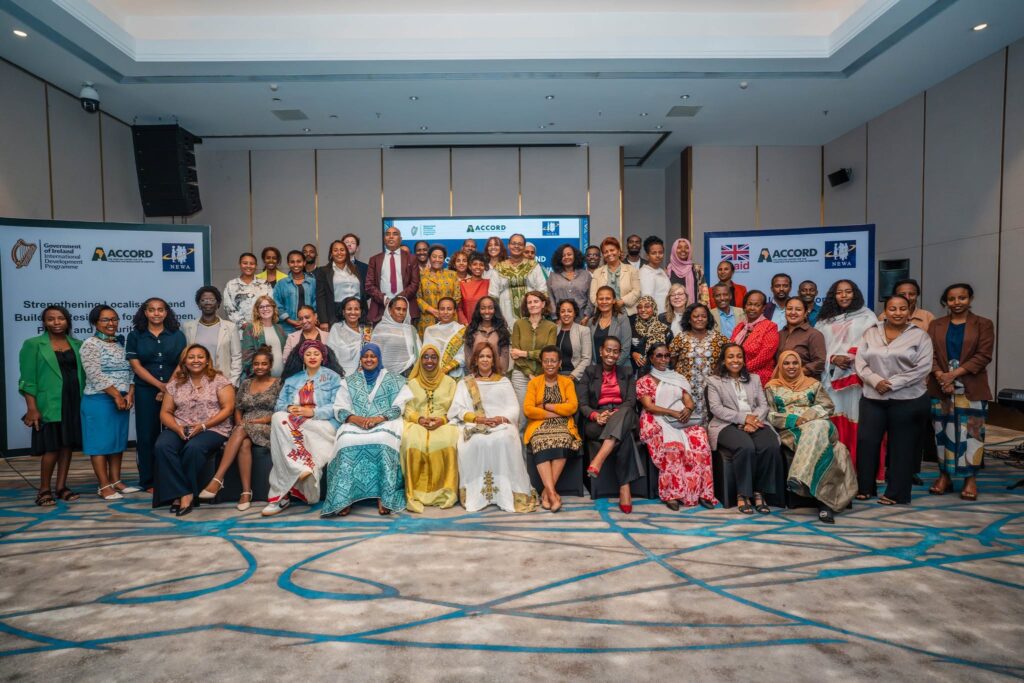
NEWA, together with EWPT and EWPB, convened the High-Level National Women, Peace and Security (WPS) Policy Dialogue Forum at Ethiopian Skylight Hotel On 22 September 2026, the Network of Ethiopian Women’s Associations (NEWA), together with the Ethiopian Women’s Peace Table (EWPT) and Ethiopian Women Peacebuilders (EWPB), convened the High-Level National Women, Peace and Security (WPS) Policy Dialogue Forum at Ethiopian Skylight Hotel, Addis Ababa, under the theme “Peacebuilding from Above and Below: Leveraging Women’s Peace Capacities and Infrastructure for Conflict Prevention.” The Forum was held in partnership with ACCORD and with financial support of Ireland government.The forum brought together women peacebuilders, government institutions, policymakers, civil society, and regional and international partners to highlight women’s contributions to peacebuilding, strengthen policy dialogue, and identify practical pathways to institutionalize women’s meaningful participation in peace processes and decision-making.The forum also generated advocacy messages, recommendations, and stakeholder commitments to connect women’s existing peace capacities and community-level peace infrastructure with national peace, recovery, and conflict-prevention processes.On 22 September 2026, the Network of Ethiopian Women’s Associations (NEWA), together with the Ethiopian Women’s Peace Table (EWPT) and Ethiopian Women Peacebuilders (EWPB), convened the High-Level National Women, Peace and Security (WPS) Policy Dialogue Forum at Ethiopian Skylight Hotel, Addis Ababa, under the theme “Peacebuilding from Above and Below: Leveraging Women’s Peace Capacities and Infrastructure for Conflict Prevention.” The Forum was held in partnership with ACCORD and with financial support of Ireland government.The forum brought together women peacebuilders, government institutions, policymakers, civil society, and regional and international partners to highlight women’s contributions to peacebuilding, strengthen policy dialogue, and identify practical pathways to institutionalize women’s meaningful participation in peace processes and decision-making.The forum also generated advocacy messages, recommendations, and stakeholder commitments to connect women’s existing peace capacities and community-level peace infrastructure with national peace, recovery, and conflict-prevention processes. 819714567_1104782871912420_435667518643041973_n 819110302_1104783581912349_5907106853778209368_n 820085103_1104787151911992_648455821680516662_n 819110334_1104783841912323_3733590603498824963_n 819405697_1104783541912353_6479722566035566261_n 820047813_1104784035245637_5561952339250987522_n 820114382_1104783715245669_6493566532250753522_n 821665084_1104785231912184_4870987402626200269_n 819068753_1104786971912010_1867736207310826800_n 820000092_1104782438579130_4400946068545669161_n Load More End of Content.

NEWA, together with EWPT and EWPB, convened the High-Level National Women, Peace and Security (WPS) Policy Dialogue Forum at Ethiopian Skylight Hotel Read More »

Strengthening women’s peace networks — From Addis Ababa outward, with sisterhood across borders

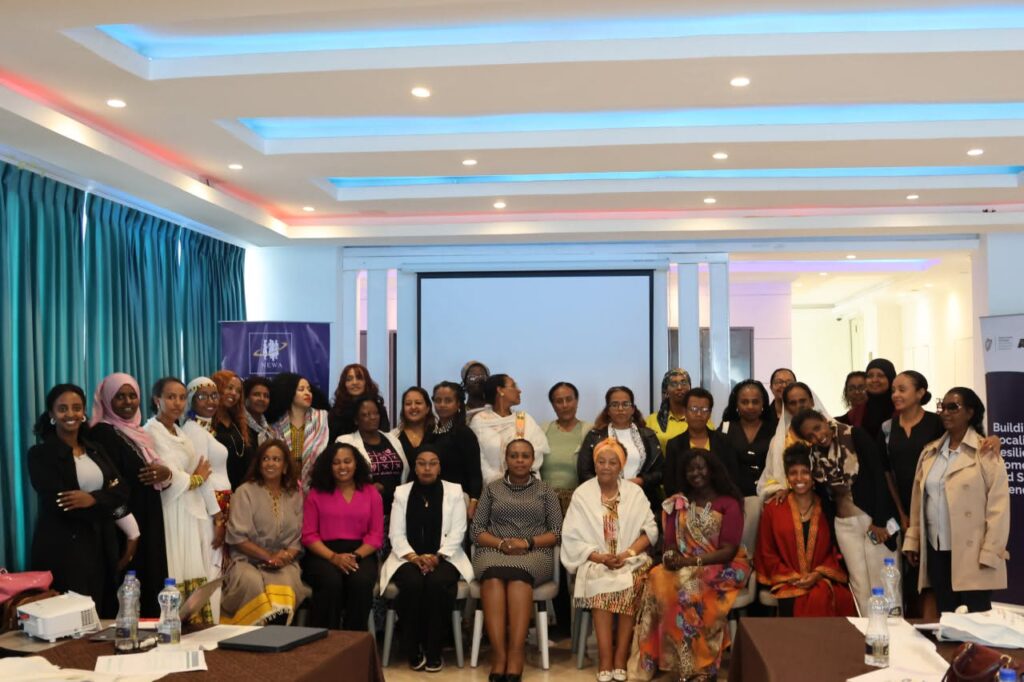
Strengthening women’s peace networks — From Addis Ababa outward, with sisterhood across borders  On 18–19 September 2026, the Network of Ethiopian Women’s Associations (NEWA) and Ethiopian Women’s Peace Table (EWPT) brought together women peacebuilders from Sudan, Somalia, Kenya, South Sudan, Uganda, and an IGAD representative from Djibouti for two days of Regional Experience-Sharing and Learning Exchange on Women, Peace and Security at Crescent International Hotel, Addis Ababa — in partnership with ACCORD, and with the financial support of the Government of Ireland through Irish Aid.The event was aimed at sharing experience, strengthening regional networks, and identifying practical pathways for advancing women’s meaningful participation in peacebuilding, conflict prevention, mediation, and peace and security decision-making.One message ran through every session: the shift now needed is from participation to influence — strengthening women-led peace infrastructure, sharing evidence across borders, and building deeper regional solidarity and coordination. 0 795386108_1102662935457747_1954965894823282648_n 810148883_1102662815457759_2959665652955595328_n 819560423_1102662938791080_1690012101696081531_n 819383905_1102662942124413_8389054537289990347_n 817176644_1102662812124426_8043812924445619955_n 817043192_1102662835457757_7869316808151491562_n

Strengthening women’s peace networks — From Addis Ababa outward, with sisterhood across borders Read More »

Powerful Community Mobilization Caravan Sweeps Fentale Woreda to End FGM, Child Marriage, and Violence Against Children

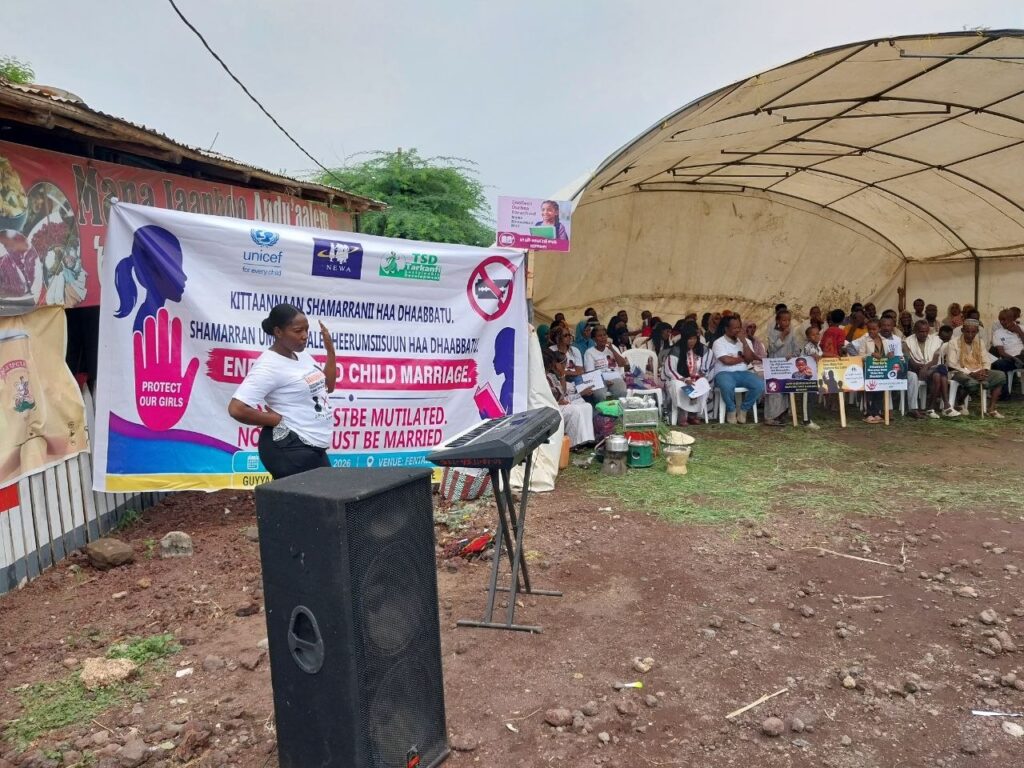
Powerful Community Mobilization Caravan Sweeps Fentale Woreda to End FGM, Child Marriage, and Violence Against Children https://newaethiopia.org/wp-content/uploads/2026/08/video_2026-08-24_22-25-14.mp4 FENTALE WOREDA, ETHIOPIA — In a resounding collective stand for human rights, gender equality, and child protection, over 5,000 community members were reached today during a high-impact, public mobilization caravan across Fentale Woreda in the East Shewa Zone of the Oromia region. The event was spearheaded by the Network of Ethiopian Women’s Associations (NEWA) in close collaboration with Tarkanfi Sustainable Development (TSD) and the Fentale Woreda Women and Social Affairs Office. This initiative is part of the broader project titled “Empowering Women-Led Associations and Community Structures to End FGM, Child Marriage, and Violence Against Children,” generously funded by UNICEF Ethiopia. A Convergence of Culture, Leadership, and Advocacy The day opened with traditional blessings from Oromo Aba Gadaa elders and energetic musical performances by local youth bands, setting an inspiring, culturally resonant tone for the mobilization. Key leaders and stakeholders delivered passionate opening addresses emphasizing unity and sustainable social change: Worknesh Begi, Executive Directress of Tarkanfi Sustainable Development (TSD), reaffirmed her organization’s unwavering commitment to dismantling harmful traditional practices (HTPs)—specifically Female Genital Mutilation (FGM) and Child Marriage (CM)—through direct grassroots engagement. Saba Gebremedhin, Executive Directress of NEWA, highlighted NEWA’s long-standing dedication to advancing gender equality, combating Gender-Based Violence (GBV), and eradicating HTPs across Ethiopia. She extended deep gratitude to the local community, government stakeholders, religious and traditional leaders, and funding partner UNICEF Ethiopia for their steadfast support. Key speeches were also delivered by the Fentale Woreda Administrator, the Woreda Women and Social Affairs Office Head, local Hadha Siiqqee (Oromo women leaders), and Aba Gadaa** elders, all pledging unified institutional and traditional alignment against child abuse and early marriage. Dynamic Public Outreach & Edutainment Across Kebeles The mobilization blended rich cultural traditions with interactive Social and Behavioral Change Communication (SBCC) tools: Cultural & Creative Arts: The gathering featured traditional coffee ceremonies, symbolic bread cutting, educational drama, poetry recitations, and live music designed to spark dialogue and challenge harmful social norms. Mobile Sound & Caravan Outreach: Vehicles equipped with banners, anti-FGM/CM placards, and high-powered Montarbo loudspeakers traversed multiple villages and Kebeles across Fentale Woreda. The mobile units brought critical awareness, legal referral details, and protection messages directly to thousands of residents. SBCC Materials: Attendees and youth facilitators were outfitted with printed campaign T-shirts, informative brochures, placards, and visibility banners to maximize campaign engagement and message retention. Unyielding Community Commitment The mobilization concluded on a historic note, as local administrative authorities, traditional leaders, and community members forged a common stance to eliminate FGM and child marriage. The event officially closed with sacred blessings and commitment pledges from traditional elders, followed by concluding remarks from the Fentale Woreda Women and Social Affairs Office. Through vehicle-supported public outreach and widespread distribution of SBCC materials, the joint initiative successfully reached more than 5,000 individuals in a single day—marking a major milestone in strengthening grassroots protection networks for women and children in Oromia. photo_2026-08-17_02-22-52 photo_2026-08-17_13-39-59 (2) photo_2026-08-17_13-39-59 photo_2026-08-17_13-40-01 photo_2026-08-24_22-24-07

Powerful Community Mobilization Caravan Sweeps Fentale Woreda to End FGM, Child Marriage, and Violence Against Children Read More »

Strengthening Staff Well-being Through Mental Health and Psychosocial Support (MHPSS)

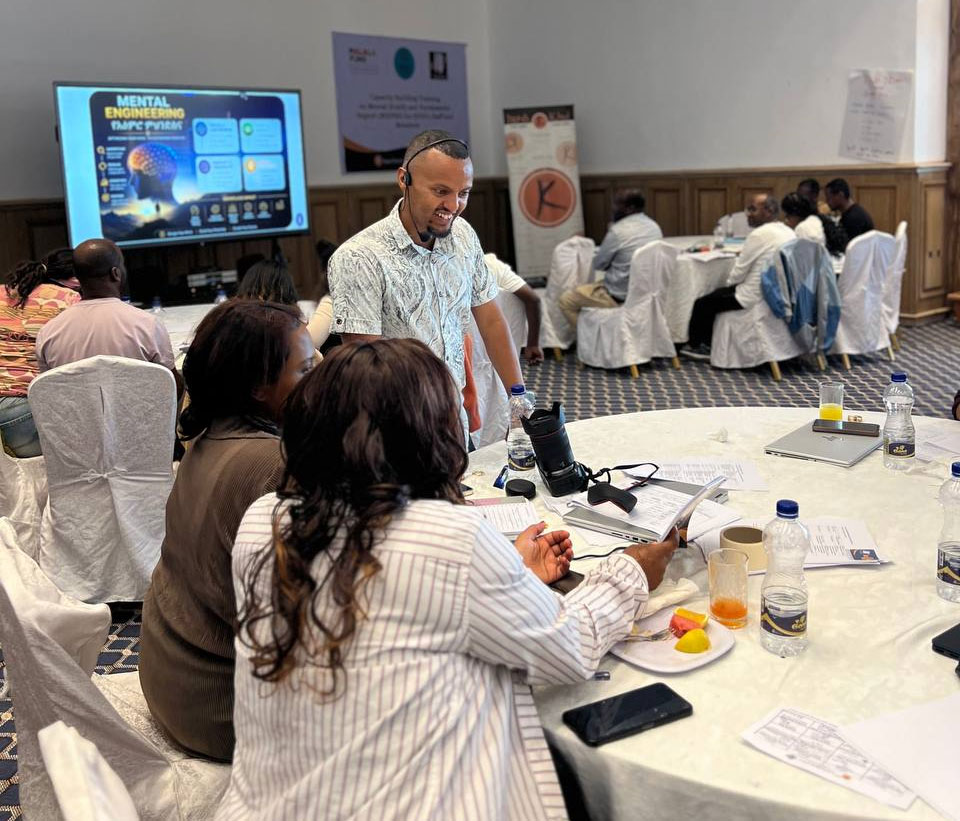
Strengthening Staff Well-being Through Mental Health and Psychosocial Support (MHPSS) With the support of the Malala Fund, NEWA successfully conducted a Mental Health and Psychosocial Support (MHPSS) training for its staff on August 1, 2026, at Nora Resort, Bishoftu.The training aimed to strengthen staff understanding of mental health and psychosocial support, enhance self-awareness, and equip participants with practical strategies to promote their well-being in both their professional and personal lives. Through interactive discussions, practical exercises, and reflective sessions, participants explored stress management techniques, self-care practices, psychological resilience, and approaches to fostering a healthy and supportive workplace.The training provided a refreshing and enriching experience, allowing staff to reconnect, reflect on their well-being, and recognize the importance of prioritizing mental health while delivering quality services to communities. It also reinforced NEWA’s commitment to creating a supportive work environment where staff well-being is valued as an essential component of organizational effectiveness. photo_2026-08-07_05-01-07 photo_2026-08-07_05-01-27 photo_2026-08-07_05-01-56 photo_2026-08-07_05-02-11 photo_2026-08-07_05-02-25 photo_2026-08-07_05-02-55 photo_2026-08-07_05-03-45 (2) photo_2026-08-07_05-03-54 photo_2026-08-07_05-03-57

Strengthening Staff Well-being Through Mental Health and Psychosocial Support (MHPSS) Read More »

Cultural Caravan Rallies Jigjiga Against Harmful Practices

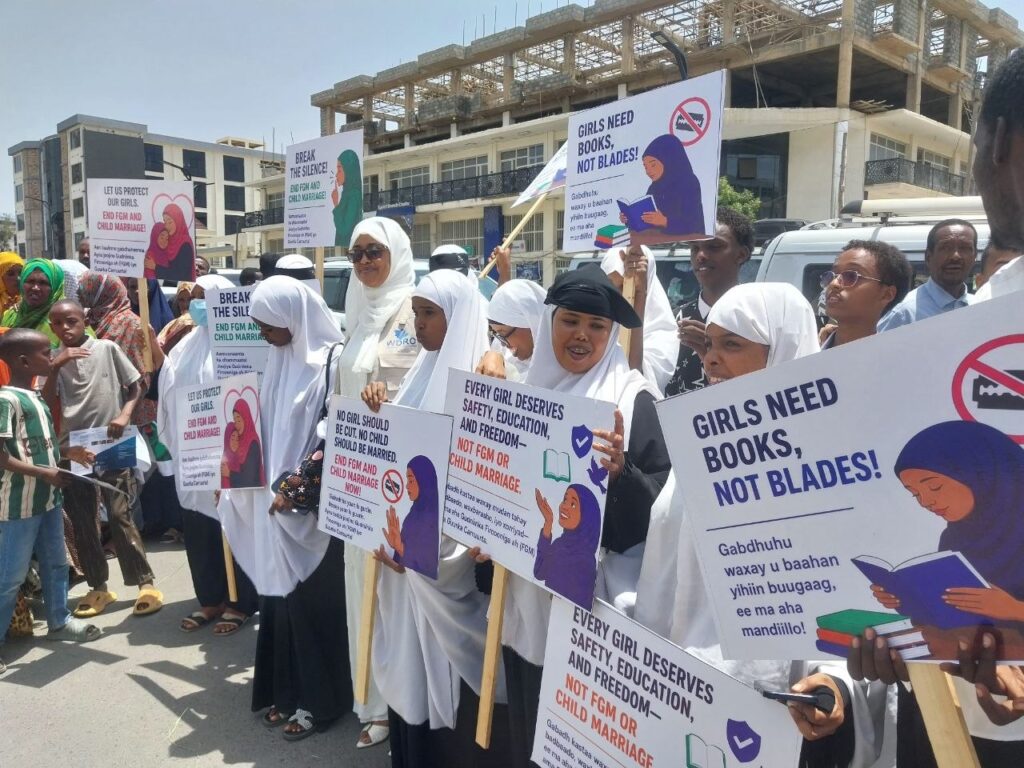
Cultural Caravan Rallies Jigjiga Against Harmful Practices https://newaethiopia.org/wp-content/uploads/2026/08/video_2026-08-07_11-46-06.mp4 Jigjiga, Somali Region – July 25, 2026 — The Network of Ethiopian Women’s Associations (NEWA), in partnership with UNICEF, successfully launched a high-impact Community Caravan and Cultural Performance outreach in Jigjiga. The initiative brought together local residents, youth, and leaders to drive action against Female Genital Mutilation (FGM), child marriage, and violence against children across the region.By combining live cultural entertainment with targeted advocacy, the event created an engaging public forum designed to address deeply rooted social norms through open dialogue.Fusing Tradition with AdvocacyThe caravan’s success hinged on a dynamic mix of live music and traditional Somali dances. These performances celebrated the region’s rich artistic heritage while creating a welcoming environment for honest conversations on challenging topics. The live cultural displays drew large crowds, maintaining high energy throughout the day and ensuring core human rights messages resonated in a culturally grounded, accessible way.To reinforce the event’s core message, NEWA deployed a comprehensive visual strategy:• Custom T-shirts carrying clear advocacy messages were worn by staff, religious leaders, women, youth, and community members.• Strategic placement of placards and banners around Jigjiga ensured key messages were unmissable.• Informational brochures detailing the health, social, and legal consequences of FGM and early marriage were distributed directly to attendees.This multi-layered approach engaged both active event participants and passersby, turning public spaces in Jigjiga into active hubs for community advocacy. The event also achieved wide reach through live broadcasts on Somali Regional TV and digital streaming across YouTube, Facebook, and NEWA’s social media platforms.The Global and Local ImperativeGlobally, more than 230 million girls and women have undergone FGM, with over 2 million young girls subjected to the practice each year before their fifth birthday. Concurrently, 650 million women worldwide were married as children, including over 50 million in Eastern and Southern Africa. To eliminate these practices by 2030 in line with Sustainable Development Goal (SDG) Target 5.3, the global pace of progress must accelerate dramatically.While Ethiopia has made notable progress over the past two decades, national data often masks significant regional variations. Girls across different zones face distinct risks based on local social dynamics, economic pressures, and humanitarian conditions.Because harmful practices are sustained by social expectations and gender inequality, ending them requires shifting community norms at every level.A Movement Driven by Women-Led ActionSustainable change relies on building grassroots coalitions that empower communities to reject harmful practices. The Network of Ethiopian Women’s Association recognized for its extensive network of 55 member organizations across federal and regional levels, NEWA was selected to lead this movement in collaboration with the Ministry of Women and Social Affairs (MoWSA), regional BoWSAs, and UNICEF support.Drawing on over two decades of advocacy—including leading the landmark national Gender-Based Violence (GBV) Campaign established in 2006—NEWA utilizes a socio-ecological approach to mobilize community influencers, religious leaders, youth, and local organizations.Through ongoing regional caravans, technical guidance, and direct community engagement, NEWA and its partners continue to build momentum toward a safer, more equitable future for every girl and woman in Ethiopia.Relevant Hashtags#EndFGM #EndChildMarriage #ProtectTheGirlChild #SomaliRegion #NEWAEthiopia #UNICEF #HerVoiceHerFuture #16DaysOfActivism #GenderEquality #Ethiopia photo_2026-07-25_01-50-54 photo_2026-07-27_13-29-46 photo_2026-08-05_18-44-54 photo_2026-08-05_18-44-55 (2) photo_2026-08-05_18-44-55 photo_2026-08-05_18-44-56 (2) photo_2026-08-05_18-44-56 photo_2026-08-05_18-44-57 (2) photo_2026-08-05_18-44-57 photo_2026-08-05_18-44-58 (2) Load More End of Content.

Cultural Caravan Rallies Jigjiga Against Harmful Practices Read More »

Strengthening Partnerships to Advance Girls’ Education

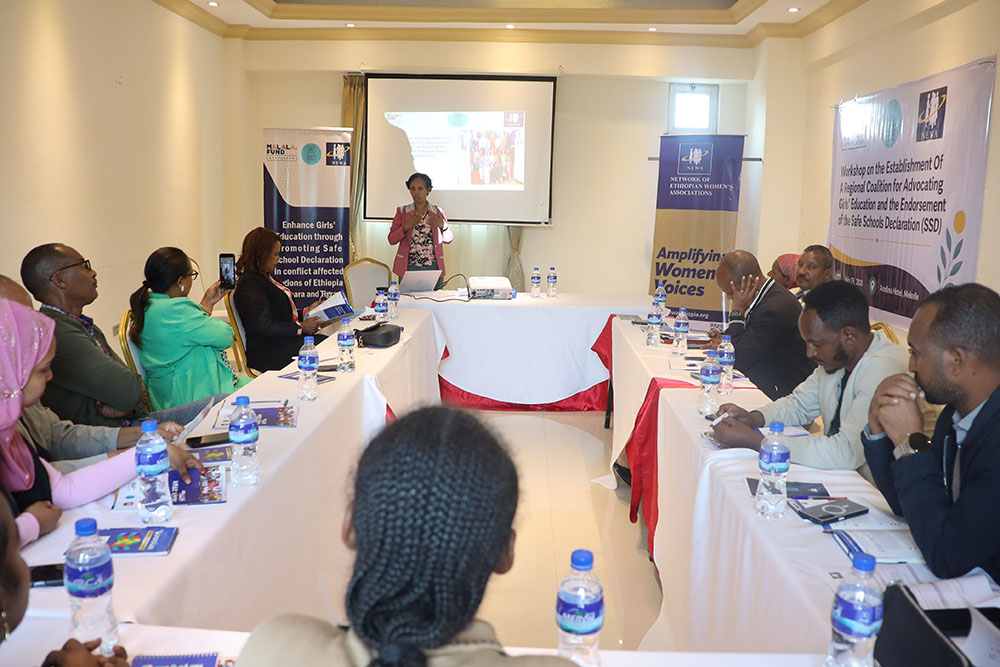
Strengthening Partnerships to Advance Girls’ Education On July 25, 2026, with the support of the Malala Fund, NEWA successfully established the Regional Coalition to advocating girls education and Safe Schools in Tigray region, Mekelle City.The coalition was established to create a sustainable multi-stakeholder platform that advances girls’ education and promotes safe, and protecting schools for all children, particularly girls. It aims to strengthen collaboration, coordination, and collective advocacy for the endorsement and implementation of the Safe Schools Declaration (SSD) across the region.The coalition brings together representatives from regional government bureaus, civil society organizations (CSOs), and other key stakeholders, who share a common commitment to protecting education and ensuring that every child—especially girls—can learn in a safe and supportive environment.During the establishment meeting, participants discussed the coalition’s objectives, roles, and collaborative approaches to promoting the Safe Schools.The establishment of the Regional Safe Schools Coalition marks a significant milestone in NEWA’s ongoing efforts, to strengthen local ownership and foster strategic partnerships on advancing Girls Education. 0Q6A0476 0Q6A0488 0Q6A0490 0Q6A0494 0Q6A0557 0Q6A0560 0Q6A0579 0Q6A0589 0Q6A0593 0Q6A0602 Load More End of Content.

Strengthening Partnerships to Advance Girls’ Education Read More »