Author name: NEWA

From Invisible to Prioritized: Driving Community Action on Unpaid Care Work

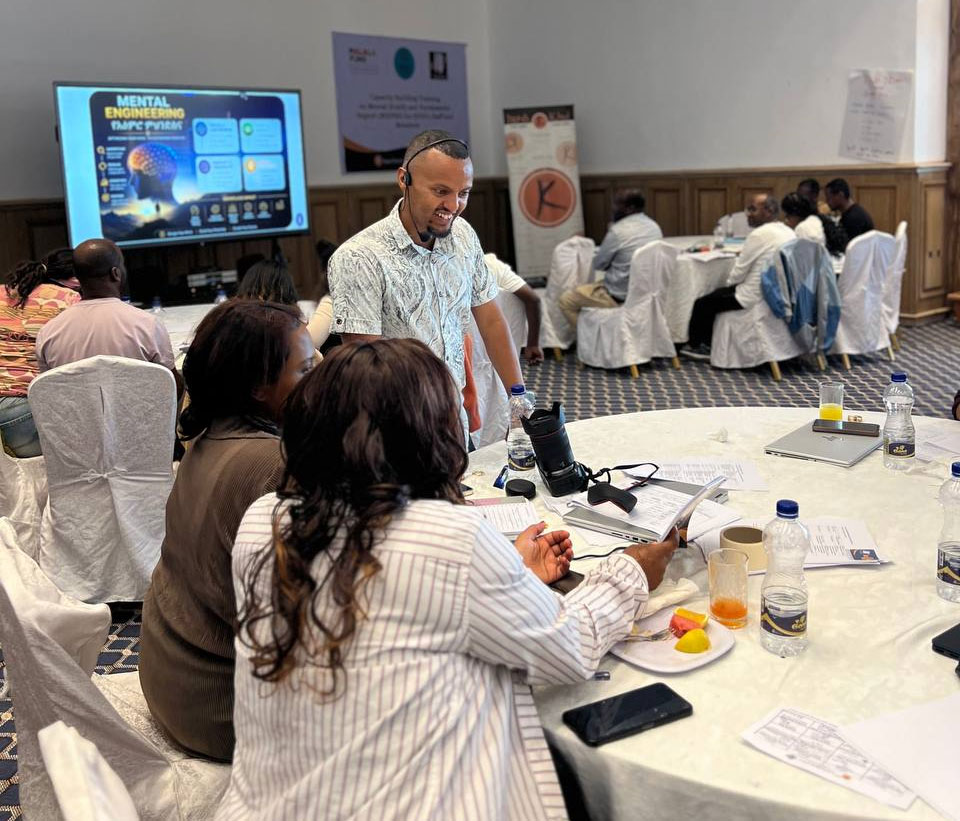
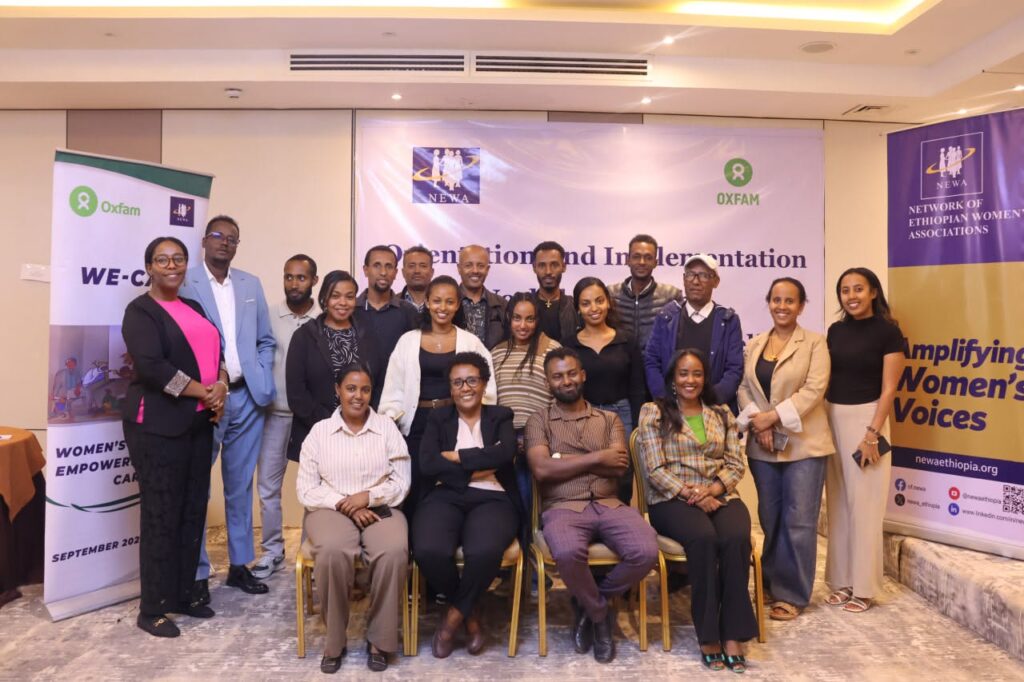
From Invisible to Prioritized: Driving Community Action on Unpaid Care Work The Ethiopian Women Right Advocates (EWRA), in collaboration with the Network of Ethiopian Women’s Associations (NEWA) and Oxfam GB under the WE-CARE Phase V Project, successfully organized and facilitated a two-day training on Unpaid Care and Domestic Work (UCDW) held on February 17–18, 2026.The training brought together a diverse group of participants, including community leaders, iddir leaders, religious leaders, youth representatives, and members of various community groups. The sessions provided a structured and inclusive platform to critically examine unpaid care and domestic work as a systemic issue closely linked to gender inequality and economic injustice.Through interactive discussions, practical exercises, and collective reflection, participants strengthened their understanding of the disproportionate care burden carried by women and girls. The training also explored concrete, community-driven strategies to promote the recognition, reduction, and redistribution of unpaid care responsibilities within households and across communities.As a result, key community actors enhanced their capacity to influence social norms, mobilize collective action, and advocate for more equitable sharing of care responsibilities at the local level. This initiative contributes to building inclusive, care-responsive, and gender-equitable community systems.Care work must move from being invisible and undervalued to recognized, shared, and prioritized.

From Invisible to Prioritized: Driving Community Action on Unpaid Care Work Read More »

A Validation and Consultation Workshop was conducted by NEWA in partnership with CST-Ethiopia

A Validation and Consultation Workshop was conducted by NEWA in partnership with CST-Ethiopia   On February 16, 2026, a Validation and Consultation Workshop was held at the Inter Luxury Hotel to examine the key challenges and opportunities for women’s leadership participation and voice in Ethiopia. The workshop was organized by the Network of Ethiopian Women’s Associations (NEWA) in partnership with CST-Ethiopia, bringing together a diverse group of government stakeholders, WROs, CSOs, HPR, political parties, NEBE, and advocates committed to strengthening women’s meaningful participation in leadership and decision-making spaces. Through open dialogue, shared experiences, and collective reflection, participants explored structural barriers, social norms, policy gaps, and emerging opportunities that shape women’s leadership journeys. The session opened with inspiring remarks from Mrs. Saba G/Medhin of NEWA, who emphasized the importance of collective action, evidence-based advocacy, and inclusive platforms that amplify women’s voices across all levels. The workshop provided a vital platform to validate findings, gather practical insights, and strengthen collaboration toward advancing women’s leadership and influence in Ethiopia. Together, participants reaffirmed their commitment to a future where women’s voices are not only heard but lead

A Validation and Consultation Workshop was conducted by NEWA in partnership with CST-Ethiopia Read More »

NEWA Delivers Essential Hygiene and Cleaning Materials to Support Women in Detention

NEWA Delivers Essential Hygiene and Cleaning Materials to Support Women in Detention The Network of Ethiopian Women’s Associations (NEWA), in collaboration with the Ministry of Justice, has initiated the procurement and delivery of essential hygiene and cleaning materials to detention centers to promote human, safe, and gender-responsive custodial conditions. To enhance human dignity, privacy, and well-being in detention facilities, access to sanitary and hygienic materials is essential. In response, NEWA recognized this and has supported the purchase and distribution of hygiene and sanitary supplies to four detention centers. This intervention, guided by national laws and international human rights standards, aims to strengthen hygiene and sanitation systems and ensure dignified, rights-based, and accountable services in detention centers. It reflects NEWA’s commitment to upholding the rights and well-being of persons in detention, particularly women and children, in line with national and international legal frameworks.   NEWA also demonstrates its broader commitment to human rights by supporting human rights and detention centers in creating more dignified environments that uphold the dignity, health, and rights of all persons under custody.

NEWA Delivers Essential Hygiene and Cleaning Materials to Support Women in Detention Read More »

NEWA successfully conducted a five-day Training of Trainers on Unpaid Care and Domestic Work (UCDW) in collaboration with Oxfam GB Ethiopia

NEWA successfully conducted a five-day Training of Trainers on Unpaid Care and Domestic Work (UCDW) in collaboration with Oxfam GB Ethiopia From February 2- 6, 2025 NEWA successfully conducted a five-day Training of Trainers on Unpaid Care and Domestic Work (UCDW) in collaboration with Oxfam GB Ethiopia under the WE-CARE Phase V Project.The training aimed to strengthen the capacity of senior program experts and executive directors to integrate UCDW into organizational strategies and cascade this knowledge across institutions and networks- advancing women’s rights, gender equality, and inclusive development in Ethiopia.On the final day, participants were awarded Certificates of Achievement, marking their commitment to completing the five days training.Together, we continue building an enabling environment for the empowerment of Ethiopian women and girls.

NEWA successfully conducted a five-day Training of Trainers on Unpaid Care and Domestic Work (UCDW) in collaboration with Oxfam GB Ethiopia Read More »

NEWA with funding from the IDRC / CRDI is implementing a project titled “Coupling Unpaid Care and Domestic Work with Local Development Agenda for Improved Care Systems in Ethiopia”.

NEWA with funding from the IDRC / CRDI is implementing a project titled “Coupling Unpaid Care and Domestic Work with Local Development Agenda for Improved Care Systems in Ethiopia”. The Network of Ethiopian Women’s Associations (NEWA) with funding from the IDRC / CRDI International Development Research Centre (IDRC) under scaling care innovation program, is implementing a project titled “Coupling Unpaid Care and Domestic Work with Local Development Agenda for Improved Care Systems in Ethiopia.The primary focus of this project is unpaid care and domestic work, alongside the implementation of gender-inclusive policies and strategies in selected ministries with the aim to highlight the significant contribution of unpaid care and domestic work to national GDP by measuring the economic value to it, to inform policy makers, and to integrate gender-sensitive strategies into implementation.Based on the generated evidence, and to raise awareness and recognition of unpaid care and domestic work, to promote fair division of labor, reduce women’s workload, and ensure policymakers and decision-makers acknowledge unpaid care domestic work and care in their agendas, NEWA has prepared a one-day orientation training on February 3rd 2026 at Sapphire Hotel, Addis Ababa, on gender mainstreaming with unpaid care and domestic work (UCDW) and intersectionality approach.This forum is designed to strengthen gender mainstreaming policy and strategy implementation and thereby advance gender equality and women empowerment.The participants of this form are from Government, CSO’s and international non-government organization, experts in gender mainstreaming and inclusivity.

NEWA with funding from the IDRC / CRDI is implementing a project titled “Coupling Unpaid Care and Domestic Work with Local Development Agenda for Improved Care Systems in Ethiopia”. Read More »

NEWA, in collaboration with the International Center for Transitional Justice (ICTJ) and the ACDD – Advocacy Center for Democracy & Development, through the financial support of the European Union, conducted a two-day capacity-building training

NEWA, in collaboration with the International Center for Transitional Justice (ICTJ) and the ACDD – Advocacy Center for Democracy & Development, through the financial support of the European Union, conducted a two-day capacity-building training​ On August 29-30, 2025, NEWA, in collaboration with the International Center for Transitional Justice (ICTJ) and the ACDD – Advocacy Center for Democracy & Development, through the financial support of the European Union, conducted a two-day capacity-building training on gender-sensitive transitional justice in Ethiopia for 30 senior officials, department heads, and experts from the የሴቶችና ማህበራዊ ጉዳይ ሚኒስቴር Ministry of Women and Social Affairs (MoWSA)The training emphasized Ethiopia’s transitional justice process, showcased NEWA and ICTJ’s gender-sensitive contributions, and outlined collaborative pathways with the Ministry of Women and Social Affairs.Through this training, NEWA and ICTJ reaffirmed their commitment to supporting strategic stakeholder engagement and responding to the identified key intervention entry point as outlined by the Ministry of Women and Social Affairs.

NEWA, in collaboration with the International Center for Transitional Justice (ICTJ) and the ACDD – Advocacy Center for Democracy & Development, through the financial support of the European Union, conducted a two-day capacity-building training Read More »

Enhancing Grassroots Women’s Involvement in the Transitional Justice Process in Ethiopia

Enhancing Grassroots Women’s Involvement in the Transitional Justice Process in Ethiopia When NEWA allies with ICTJ, women’s voices are amplified in the transitional justice process in Ethiopia.In 2025, the Network of Ethiopian Women’s Associations (NEWA), in partnership with the International Centre for Transitional Justice (ICTJ) and the Advocacy Centre for Democracy and Development (ACDD), and with financial support from the European Union, organised a series of two-day community dialogues in four regions.   These sessions were delivered in collaboration with regional NEWA partners Siinqee Women Development Association (SWDA) in Oromia and Hiigsi Women Development Organisation (HWDO) in the Somali Region, and extended to Mekelle, Tigray, with Rise and Shine Women Empowerment Centre, and Dessie, Amhara, with Beza for Women Community Base Development Association. Through Community dialogue circles brought together 20 women participants in each four regions. The community dialogues introduced transitional justice concepts for participants and gathered powerful grassroots transitional justice perspectives. These community dialogues highlight the critical importance of amplifying women’s voices in transitional justice, ensuring Ethiopia’s path toward justice and reconciliation is inclusive, survivor-centered, and responsive to grassroots realities. The participant highlighted that transitional justice processes are needed for women’s inclusion in decision-making and psychosocial support, while also calling for improvements in communication and awareness creation.

Enhancing Grassroots Women’s Involvement in the Transitional Justice Process in Ethiopia Read More »

NEWA led TOT training on the Gender Sensitive/ transformative Transitional Justice Implementation

NEWA led TOT training on the Gender Sensitive/ transformative Transitional Justice Implementation In 2025, from March 27-29, with the support of International Center for Transitional Justice (ICTJ) in collaboration of the ACDD through the financial support of the European Union, NEWA conducted a TOT training for 20 women participants from the Gender Reference Group for Transitional Justice (GRG-TJ) established by NEWA and ICTJ, and WRO Advocacy Group for Transitional Justice (WAG-TJ), representing regions across different parts of Ethiopia, selected for their technical expertise and community representation.The training was grounded in the implementation of gender- sensitive/Transformative transitional justice in alignment with MHPSS. Additionally, the training was to foster coordination for continuous information exchange, input, evaluation, and learning among the Gender Reference Group and WRO Advocacy Group for TJ (WAG-TJ), regarding transitional justice in Ethiopia.Through this engagement, NEWA and ICTJ affirmed a commitment to promoting Inclusive Gender-Sensitive Approaches in the Legal and Institutional Framework of the Transitional Justice Process in Ethiopia.

NEWA led TOT training on the Gender Sensitive/ transformative Transitional Justice Implementation Read More »

Terms of Reference (ToR) To conduct an Assessment on Existing Accountability Mechanisms for the Protection, Prevention, and Response to SGBV and CRSV (OPEN)

Terms of Reference (ToR) To conduct an Assessment on Existing Accountability Mechanisms for the Protection, Prevention, and Response to SGBV and CRSV (OPEN) About the Job Background about NEWA The Network of Ethiopian Women’s Associations (NEWA) is a non-partisan, non-governmental national network established in 2003. Currently, NEWA has 50-member local associations and organizations working together for a strong advocacy voice for gender equality and women’s political, socio-economic, and legal advancement. NEWA has a twofold goal: To synchronize the of women’s associations into a cohesive collective effort, fostering synergy to achieve common goals for gender equality. To launch robust public campaigns aimed at promoting, advocating for, and lobbying for women’s rights. NEWA is guided by its Five-Year Strategic Plan, and research and evidence-based advocacy is one of the overarching and strategic objectives. NEWA has made significant strides in addressing the gender gap across the nation and amplifying women’s voices in collaboration with both local and international partners. With the financial support from the UN Trust Fund, NEWA is implementing a project titled “Improving legal and service response to SGBV in conflict affected areas of Ethiopia.” It is designed to enhance the implementation of legislation, policies, national action plans, service standards, and accountability systems to prevent and end SGBV in Ethiopia. The project is to be implemented at both national and regional levels, specifically in Amhara, Tigray and Benishangul-Gumuz regions. To effectively and efficiently implement and meet the set objectives and outcomes of this intervention, NEWA will engage and collaborate with relevant stakeholders at all levels and phases. This ToR is therefore prepared to call an expression of interest for consultant/s or firm to apply and provide the consultancy service. BackgroundWhile significant progress has been made in developing laws and policies addressing Sexual and Gender-Based Violence (SGBV) and Conflict-Related Sexual Violence (CRSV), the challenge of ensuring accountability and effective implementation remains profound. Survivors frequently encounter barriers in accessing justice, limited protection mechanisms, and inadequate coordination among actors. This assessment seeks to examine how accountability mechanisms function in practice, identifying strengths, weaknesses, and opportunities for enhancing institutional and community-level systems that ensure prevention, protection, and response to SGBV and CRSV. It will also explore how these mechanisms can better measure progress and outcomes in delivering survivor-centered justice. Despite the existence of multiple policies and institutional frameworks, there is often limited integration, inconsistent data management, and weak monitoring systems that hinder accountability. Strengthening these systems is critical for building trust, ensuring justice, and promoting long-term prevention efforts. This study will therefore analyze the structure, capacity, and effectiveness of existing accountability mechanisms and identify opportunities for sustainable improvement. Purpose of the AssessmentThe purpose of this assessment is to generate credible and evidence-based insights that inform policy and programmatic actions to strengthen Ethiopia’s response to conflict-induced sexual and gender-based violence (SGBV) and sexual /gender-based violence (S/GBV). This assessment aims to examine how existing accountability mechanisms function in practice; evaluating their effectiveness, transparency, and responsiveness to survivors’ needs. It will assess whether these systems adequately promote justice, coordination, and the prevention of recurrence.The findings will inform evidence-based policy reform and program development, strengthen institutional accountability and ensure that SGBV and CRSV prevention and response mechanisms are more survivor-centered, transparent, and effective. Objectives Major objectiveThe main objective of the assessment is to assess the existing accountability mechanisms that measure and strengthen protection, prevention, and response to SGBV and CRSV at the federal level and across the three regions (Amhara, Tigray, and Benishangul-Gumuz) Specific objectivesThe specific objectives include: To map institutional, policy, and community-based accountability mechanisms for SGBV and CRSV. To assess how these mechanisms ensure justice, transparency, and survivor participation. To evaluate monitoring and evaluation systems used to track prevention, protection, and response outcomes. To identify gaps and good practices in coordination, data collection, and survivor-centered service delivery. To recommend strategies to strengthen accountability systems at both national and regional levels. Scope of WorkThe consultant/firm will be responsible for the following tasks:The consultant will be responsible for conducting a comprehensive and participatory assessment of existing accountability mechanisms that address Sexual and Gender-Based Violence (SGBV) and Conflict-Related Sexual Violence (CRSV). The assignment will combine an extensive desk review with consultative engagements to ensure evidence-based and inclusive findings. Specifically, the consultant will: Review and analyze existing accountability frameworks including judicial, administrative, and community-based mechanisms to evaluate their structure, effectiveness, and responsiveness to survivors’ needs. Assess coordination mechanisms at national and regional levels, such as GBV sub-clusters, inter-ministerial committees, and survivor support networks, to identify functional strengths, overlaps, and gaps. Examine data management and performance monitoring systems related to SGBV and CRSV prevention, protection, and response, with attention to the quality, accessibility, and utilization of information. Conduct II, FGD and KII with key stakeholders, including justice sector representatives, law enforcement bodies, service providers, survivors’ groups, and civil society organizations, WRO, ensuring that diverse perspectives inform the analysis.  Identify and propose policy and institutional reforms aimed at enhancing accountability, transparency, coordination, and survivor-centered service delivery across national and regional systems. MethodologyThe consultant is expected to adopt a mixed-method and participatory approach to ensure that the assessment is comprehensive, evidence-based, and inclusive. The following methods, but not limited to, are suggested, including applying a conflict-sensitive, survivor-centered, and mixed-methods approach: Specifically, the consultant will: Conduct a desk review of national and regional legal, policy, and institutional frameworks relevant to SGBV and CRSV, including strategic plans, progress reports, and accountability tools. Map existing accountability mechanisms that can be formal and informal and analyze their structure, effectiveness, and alignment with international and regional standards. Carry out key informant interviews (KIIs) with representatives from government institutions, justice and security sectors, survivor support organizations, civil society actors, WROs, and development partners. Facilitate focus group discussions (FGDs) with survivors, women’s rights organizations, and community-based actors to capture lived experiences and local perspectives. Apply both qualitative and quantitative analysis to triangulate findings and draw practical, context-specific recommendations. Quantitative data will be collected through structured surveys to complement and substantiate the qualitative findings. The methodology should prioritize ethical standards, including

Terms of Reference (ToR) To conduct an Assessment on Existing Accountability Mechanisms for the Protection, Prevention, and Response to SGBV and CRSV (OPEN) Read More »

NEWA in collaboration with the ICTJ and ACDD through the financial support of the European Union, established a female only Gender Reference Group for Transitional justice.

NEWA in collaboration with the ICTJ and ACDD through the financial support of the European Union, established a female only Gender Reference Group for Transitional justice. On March 2025, NEWA in collaboration with the International Center for Transitional Justice (ICTJ) and the ACDD – Advocacy Center for Democracy & Development, through the financial support of the European Union, established a female only Gender Reference Group for Transitional justice.The member of the group was selected through recommendations and based on their previous contribution and experience on Gender Equality with the aims to strengthen gender-responsive implementation of Transitional Justice in Ethiopia by amplifying women’s voices through legislative advocacy, providing technical guidance and capacity building, and generating evidence to inform policy and legal development.The Gender Reference Group held seven consultative meetings from March – August 2025 and provide inputs to all components of draft transitional justice legislation from gender perspective.

NEWA in collaboration with the ICTJ and ACDD through the financial support of the European Union, established a female only Gender Reference Group for Transitional justice. Read More »