Blog

Women’s political participation
NEWA Logo

NEWA in collaboration with DEMO FINLAND has delivered series of trainings that focus on women’s political participation and decision-making for women in politics. The three two days trainings have been conducted in the towns of Adama and Assosa from May to August 2022. Participants of these trainings were women members of Benshangul Gumuz regional Council, Oromia regional council and federal house of people’s representatives. The main objective of the training workshops on Women’s Political Participation and Leadership is to strengthen the role of women parliamentarians and regional council members in a way that increases their influence in decision-making for effective governance and plays their role to enhance women’s political participation both at regional and national level. The training covered range of topics under policy influencing opportunities and challenges while touched core concepts in the essence of gender and the recognition of women’s political participation and decision-making in development activities, the relationship between gender and women’s political and decision-making participation and forms of women’s political and decision-making participation. The trainings were attended by more than 180 women politicians. As a follow up activity to these trainings, a post-election review meeting on the 6th general election process with members of Women Politician Network has been conducted and a project idea developed based on way forwards and lessons drawn from the meeting. The need for a regularized and systematic dialogue platform facilitated by mandated agencies such as (NEBE) in collaboration with political parties would have immense contribution for women politicians to come together to exchange, learn and network was one of the recommendations of the review meeting. A continuation of pre-election capacity-building training on women political participation for female members of political parties at the national level has been delivered to 50 women in early September 2022. Mrs. Desta Tilahun, executive secretary of Ethiopian People’s Revolutionary party (EPRP) was one of the participants of the training for women politicians. She is also vice chair of women politicians’ network/coalition. She believes the training helped them to get insight on how they can build their capacity and pass the hurdles the patriarchal system poses on women who wants to join politics. “We, women in politics need to work on ourselves and improve our self-esteem. We have got a lot from the training sessions on how to bypass the patriarchy that puts hurdles in our way”. According to Desta women politicians, both in the ruling and opposition party face similar challenges and the training helped them to have a common agenda around this and beyond. Mrs. Herowak Girma, executive committee member of Oromo Federalist Congress (OFC) is another opposition politician who have attended the training. She found the training to be practical as its focus was on how to enhance women’s political participation, and personally she got very good insights on how to build self-confidence. She thinks similar trainings should have been given by the government as its also responsible for improving women’s participation in politics. Her party is planning to deliver similar training to women members.

Women’s political participation Read More »
Gender Talk Forum

NEWA Logo

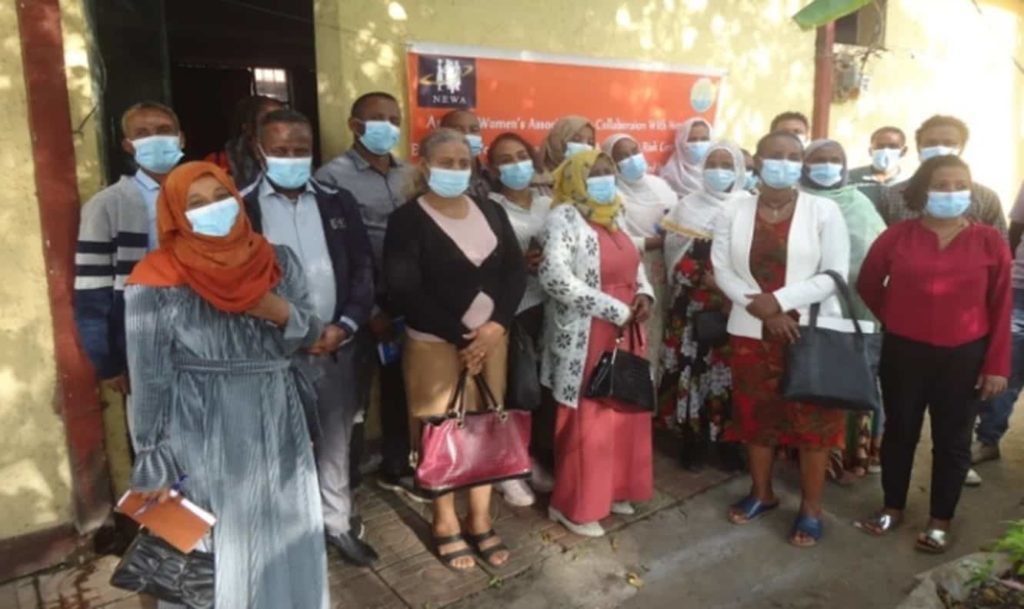
Women’s movements are instrumental in flagging issues relating to women’s rights and Gender equality. This has been witnessed through the various movements that have championed women’s causes in Ethiopia. It is with this context that NEWA had planned this year’s “Gender talk Forum ”, which is NEWA’s signature dialogue platform that has been ongoing for many years. This year, in commemoration of International Women’s Day, The Gender talk forum tried to bring together governmental and non-governmental stakeholders with the theme of “Revisiting women’s movements in Ethiopia by sharing best practices, highlighting experiences, and deliberating on ways forward. The Gender talk forum is a part of the project titled ‘Women’s Voice and Leadership’ currently being implemented by NEWA in partnership with Plan International Ethiopia. The gender talk forum was held on March 24, 2022, in Sapphire Addis Hotel. This platform brought together women right organizations, CSOs, International organizations, UN representatives, Academia’s, and also prominent women right activists. This year’s gender talk forum themed “Women’s right movements in Ethiopia towards gender equality” focused on highlighting the history, struggle, milestones, setbacks, success and challenges of the Ethiopian women’s right movement. A presentation by Dr. Agaredech from AAU was presented to the scene after which an intergenerational panel discussion was held. The panelist were two known women right defenders, Ms. Huluagerish from Addis Ababa Women Associations and Ruth Yitbarek from Yellow movement. An interesting discussion was held on the feminism history in Ethiopia as well as the importance of solidarity, networking and collaboration of women right structures for a better impact. During this year’s Gender talk forum, Mrs. Letty Chiwara the UN women’s representative to Ethiopia, AU, and UN ECA was recognized and a small farewell party was held towards the end of the event.  

Gender Talk Forum Read More »

What should be done about the rise in SGBV against Women?

Stories of Capacity Development: Changing COVID-19 perceptions in Ethiopia through a women-led organization

Many researches indicate that there is a significant increase in the number of GBV cases faced by women and children. According to the latest Ethiopian Demographic and Health Survey (EDHS 2016) at least one out of every three women in Ethiopia has been beaten, coerced into sex, or otherwise abused in her lifetime, by an intimate partner, and nearly one-quarter (23 percent) of women have at some point in their life lives experienced physical violence, while 10 percent of the women have experienced sexual violence. It is noted in the survey that there is a high rate of reporting of (66 percent) by women and girls who experienced violence. As Network of Ethiopian Women’s Associations, NEWA’s member Ethiopian Women Lawyers Association EWLA’s November 2022 intimate partner violence report of cases handled under the organization’s head office there was 6 reporter of intimate partner violence and 90 percent of 66 divorce cases are results of physical, psychological, and sexual abuses. In cognizant with that, SGBV is at a concern state in Ethiopia, whether within the context of conflict or outside the conflict setting as reports are stating the high occurrence of SGBV. SGBV are detrimental to women’s physical, psychological, economic, and overall well-being. Conflict should not be a ground for conflict related sexual violence (CRSV). Women face sexual violence in all settings, such as workplace, school, home, during conflict etc.  Hence, it is important for everyone to do their part in combatting SGBV. To ensure accountability, the government, CSOs and influencers should work on creating awareness and to bring a change in attitude. The issue of combatting SGBV should be done with a human right approach rather charity-based approach. This is since women’s and girls’ safety from SGBV is a human right. Hence, any form of violation on women right is by default a violation of human right. In relation to this any sort of victimization and victim blaming of survivors that are being witnessing at alarming rate should be addressed as a violation of human right as well.  It should also well noted that the society needs prevent and stand against any form of SGBV. The government is also obligated to ensure whether in the context of conflict or not that any case of SGBV is well accounted for. The access to medical, psychological, and legal aid for survivors of SGBV should be ensure by the government and concerned non-government bodies. Furthermore, we encourage the continued CSOs effort in creating awareness on SGBV as a violation of human right. It is important to highlight the fact that although governmental and non-governmental organizations working on women right have not been to fully combat SGBV. However, combatting SGBV faced by women and children is a responsibility of family, religious institutions, and schools, hence should take it as a concern with the stand of not being silent in the face of SGBV. As it is time more and more cases of violence against women coming to light, this kinjit’s newsletter message is focused on standing against SGBV. NEWA had served as the coordinator for the campaign against gender-based violence group (GBV-CE) since 2006 to combat and decrease SGBV in Ethiopia. This year (November 25, 2022- December 10, 2022) with the theme for the GBV campaign group is “In conflict or peace, let’s stop sexual and gender-based violence” there were different activities focusing on discussions, awareness program, online and offline activisms. Finally, we relay the message that the government and non-government institutions should work to ensure safety of women and children from SGBV. The society should focus on combatting SGBV in all settings. The government in conflict and in another context should work to fight SGBV.      

What should be done about the rise in SGBV against Women? Read More »

Stories of Capacity Development: Changing COVID-19 perceptions in Ethiopia through a women-led organization

Stories of Capacity Development: Changing COVID-19 perceptions in Ethiopia through a women-led organization

At the onset of the COVID-19 pandemic, Ethiopia, with more than 115 million people, was challenged tremendously. Reaching key groups in a country in which 80 percent of the population resides in peri-rural areas was difficult, and worsened by the ongoing conflict concentrated in the north. JSI, through its Last 10 Kilometers (L10K) project and with funding from the Bill & Melinda Gates Foundation, partnered with the Network of Ethiopian Women Association (NEWA) to strengthen risk communication and community engagement to thwart the spread COVID-19. Through a series of consultative sessions with over 850 women and girls in Addis Ababa, Oromia, Amhara, and Sidama Regions, it was found that the low vaccine acceptance rate of the was attributable to incorrect information. These included false claims that the vaccine led to infertility, that the vaccination was prohibited by religious beliefs, and that vaccination is the West’s attempt to impose its values on Africa. JSI helped NEWA members work with Ethiopia’s Ministry of Health (MOH) to design social and behavior change communication (SBCC) materials and messages to facilitate COVID-19-prevention behavior among women. JSI supported NEWA on developing and adapting guides and tools and conducting research. NEWA collected data and produced more evidence on COVID-19 prevention measures and the need for medical intervention in response to severe infection. JSI’s technical assistance and NEWA’s research led to a thorough SBCC campaign that included gender-sensitive radio messages, house-to-house visits, and informal community meetings with women. NEWA staff and its partners disseminated SBCC materials throughout key woredas (districts) in the four regions where L10K works. The materials were also distributed to women in isolated rural communities and remote villages through regional health centers with support from the MOH, Ethiopia’s Women’s Development Army (a group of trained volunteer health workers), and certified health extension workers. Ultimately, these combined efforts helped the MOH design actions to reduce the transmission of COVID-19 and vaccinate 65 percent of the targeted population.Source: JSI – https://www.jsi.com/stories-of-capacity-development-changing-covid-19-perceptions-ethiopia/?fbclid=IwAR1_pXDIfwg-hWvU9zH-0bMHFH3mdAu27xM0IPToz6SMWz1YOPQmQUzFNhY

Stories of Capacity Development: Changing COVID-19 perceptions in Ethiopia through a women-led organization Read More »

Big visions -Young Women’s Voice

Edelawit Alemu

Edelawit Alemu, 24, is a passionate young woman currently working in Benshangul-Gumuz region of Metekel Zone, a place known for recurring conflicts. However, working under difficult circumstances is not intimidating for a young woman with vision like Edelawit. Rather, facing challenges and learning in the process is her way of growing professionally and personally. The organization she is working for is Mujejeguwa Loka Women’s Development Association, founded by the late Tirhas Mezgebe, the well-known women rights activist served the community for some 30 years. She is from the small town of Wonji, 103 Kms from the capital Addis Ababa. She studied ‘Early childhood care and education’ and graduated from Woldiya University one and half years ago. She was passionate about serving the society, especially working on issues affecting women and children and she has joined the new department despite the advice that the field of study won’t get her a job as it is new in the job market. Immediately after graduation she joined TARKANFI Sustainable Development Association as project coordinator for the organization’s Sheleads project. The project, implemented by TARKANFI as a subgrantee of Network of Ethiopia Women’s Associations (NEWA) aimed at empowering girls and young women. “Coordinating the activities aimed at helping girls and young women build their capacity around motivation, self-confidence and communication skills also helped me to be a better version of myself” said Edelawit. She also believes her experiences of the Sheleads helped her broaden her scope. Edelawit is member of the Ethiopian Young Women Voice (EYWV), aspiring young girls’ group recently established by NEWA under the Sheleads project. 40 young women from different regions of the country are members of the group. She describes herself as confident, someone who easily communicates her ideas and willing to learn and explore new things. According to Edelawit, as someone who as has been implementing Sheleads and now part of a group under the project, facing challenges, being confident and able to be a voice for the silenced, having the willingness and empathy to understand other women’s situation are the few skills she has acquired through Sheleads among others. She believes empowering young women is very critical to create a society that treats men and women equally. Establishing a foundation that helps children and women is Edelawit’s vision. Edelawit and her likes are the hopes that the country will have many more Tirhases.

Big visions -Young Women’s Voice Read More »

Becoming a Woman of Vision

Tirumar Abate - Success Stories

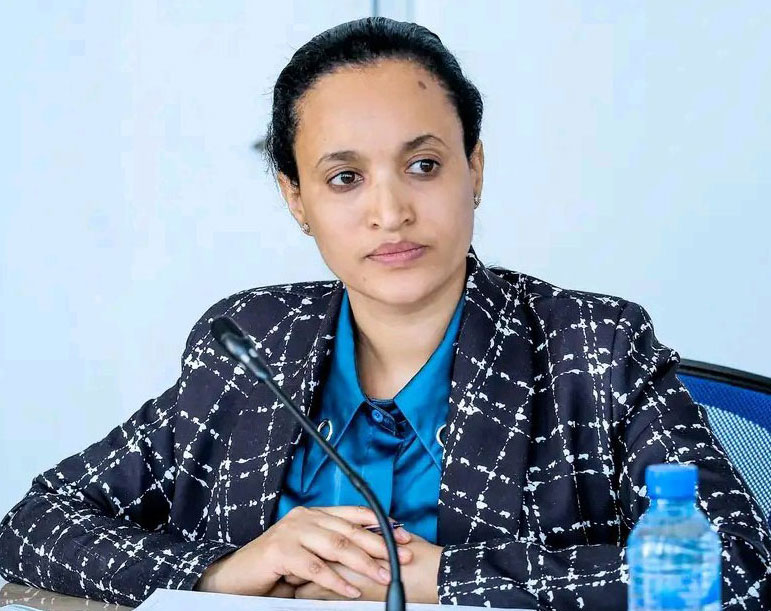
H.E the state minister for Planning and Development, Mrs Tirumar Abate,38, is one of the young high government officials. She studied Business Management at undergrad and has an MA in Leadership and Governance. She was among the women leaders who have shared their experience to young women during the establishment of Young Ethiopian Women’s Voice (YEWV) in December 2022. She is also one of the women politicians who participated in the leadership and decision-making pre-election (Ethiopian national election 2021) training delivered by Network of Ethiopian Women’s Associations (NEWA), Timran and UN Women. She was an active participant in events at schools and Universities she has attended, and she recalled that those exposures helped her to be assertive and vocal. The passing away of her mother when she was just young, forced her to take responsibility for a family of five including looking after her younger siblings. This was where she started to learn how to face challenges and use them to her own advantage. She had sat down for the entrance exam for the masters program when it was about six days to her due date. She passed and started class when her baby was two months old, and she graduated with the highest grade. Though it’s challenging, she believes neither passing through pregnancy nor raising a baby should stop women from advancing in their education or career. “Women shouldn’t shy away from taking chances to grab leadership roles at any stage” is her advice for young women. She was a teacher and served at different posts in the lower administrative tiers before joining Enat Party, opposition party. She remembers she used to mentor three students to participate in different activities in their community and grab chances. She has never let any capacity building training or workshops organized by women as she thinks such platforms are critical for women to build their capacity and confidence and to be assertive. She believes it’s the women’s responsibility to grab such opportunities. Having a vision is another important thing as Tirumar explained further. According to her, having a vision gives clarity and helps to keep motivated. She strongly believes platforms like YEWV are important for young women to build their capacity and learn from each other’s experiences. Regarding women’s participation in politics, she said politics is nothing but problem solving. According to her, women shouldn’t shy away from politics, rather they have to participate in any capacity building training, build their capacity and confidence as this helps to face the challenges hindering them from joining politics. Tirumar’s vision is to continue serving her country while aspiring for higher positions.

Becoming a Woman of Vision Read More »