Author name: NEWA

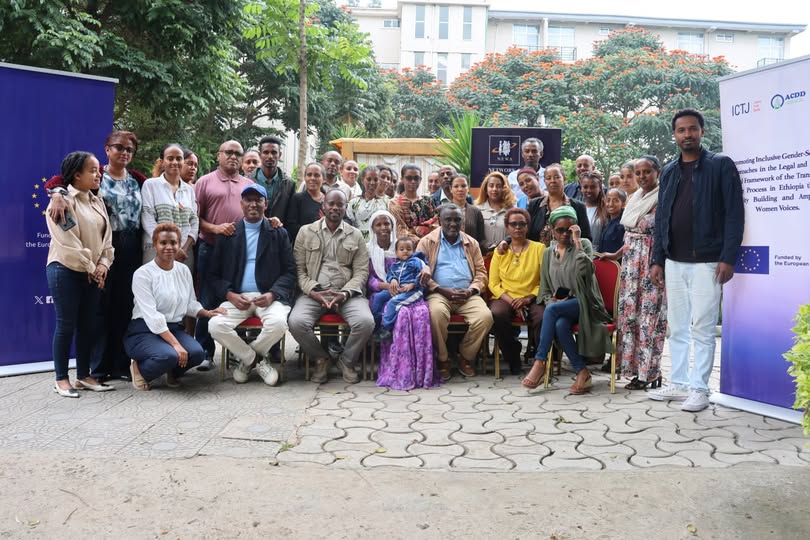
NEWA, in collaboration with the International Center for Transitional Justice (ICTJ) and the ACDD – Advocacy Center for Democracy & Development, through the financial support of the European Union, conducted a two-day capacity-building training

NEWA, in collaboration with the International Center for Transitional Justice (ICTJ) and the ACDD – Advocacy Center for Democracy & Development, through the financial support of the European Union, conducted a two-day capacity-building training​ On August 29-30, 2025, NEWA, in collaboration with the International Center for Transitional Justice (ICTJ) and the ACDD – Advocacy Center for Democracy & Development, through the financial support of the European Union, conducted a two-day capacity-building training on gender-sensitive transitional justice in Ethiopia for 30 senior officials, department heads, and experts from the የሴቶችና ማህበራዊ ጉዳይ ሚኒስቴር Ministry of Women and Social Affairs (MoWSA)The training emphasized Ethiopia’s transitional justice process, showcased NEWA and ICTJ’s gender-sensitive contributions, and outlined collaborative pathways with the Ministry of Women and Social Affairs.Through this training, NEWA and ICTJ reaffirmed their commitment to supporting strategic stakeholder engagement and responding to the identified key intervention entry point as outlined by the Ministry of Women and Social Affairs.

NEWA, in collaboration with the International Center for Transitional Justice (ICTJ) and the ACDD – Advocacy Center for Democracy & Development, through the financial support of the European Union, conducted a two-day capacity-building training Read More »

Enhancing Grassroots Women’s Involvement in the Transitional Justice Process in Ethiopia

Enhancing Grassroots Women’s Involvement in the Transitional Justice Process in Ethiopia When NEWA allies with ICTJ, women’s voices are amplified in the transitional justice process in Ethiopia.In 2025, the Network of Ethiopian Women’s Associations (NEWA), in partnership with the International Centre for Transitional Justice (ICTJ) and the Advocacy Centre for Democracy and Development (ACDD), and with financial support from the European Union, organised a series of two-day community dialogues in four regions.   These sessions were delivered in collaboration with regional NEWA partners Siinqee Women Development Association (SWDA) in Oromia and Hiigsi Women Development Organisation (HWDO) in the Somali Region, and extended to Mekelle, Tigray, with Rise and Shine Women Empowerment Centre, and Dessie, Amhara, with Beza for Women Community Base Development Association. Through Community dialogue circles brought together 20 women participants in each four regions. The community dialogues introduced transitional justice concepts for participants and gathered powerful grassroots transitional justice perspectives. These community dialogues highlight the critical importance of amplifying women’s voices in transitional justice, ensuring Ethiopia’s path toward justice and reconciliation is inclusive, survivor-centered, and responsive to grassroots realities. The participant highlighted that transitional justice processes are needed for women’s inclusion in decision-making and psychosocial support, while also calling for improvements in communication and awareness creation.

Enhancing Grassroots Women’s Involvement in the Transitional Justice Process in Ethiopia Read More »

NEWA led TOT training on the Gender Sensitive/ transformative Transitional Justice Implementation

NEWA led TOT training on the Gender Sensitive/ transformative Transitional Justice Implementation In 2025, from March 27-29, with the support of International Center for Transitional Justice (ICTJ) in collaboration of the ACDD through the financial support of the European Union, NEWA conducted a TOT training for 20 women participants from the Gender Reference Group for Transitional Justice (GRG-TJ) established by NEWA and ICTJ, and WRO Advocacy Group for Transitional Justice (WAG-TJ), representing regions across different parts of Ethiopia, selected for their technical expertise and community representation.The training was grounded in the implementation of gender- sensitive/Transformative transitional justice in alignment with MHPSS. Additionally, the training was to foster coordination for continuous information exchange, input, evaluation, and learning among the Gender Reference Group and WRO Advocacy Group for TJ (WAG-TJ), regarding transitional justice in Ethiopia.Through this engagement, NEWA and ICTJ affirmed a commitment to promoting Inclusive Gender-Sensitive Approaches in the Legal and Institutional Framework of the Transitional Justice Process in Ethiopia.

NEWA led TOT training on the Gender Sensitive/ transformative Transitional Justice Implementation Read More »

Terms of Reference (ToR) To conduct an Assessment on Existing Accountability Mechanisms for the Protection, Prevention, and Response to SGBV and CRSV (OPEN)

Terms of Reference (ToR) To conduct an Assessment on Existing Accountability Mechanisms for the Protection, Prevention, and Response to SGBV and CRSV (OPEN) About the Job Background about NEWA The Network of Ethiopian Women’s Associations (NEWA) is a non-partisan, non-governmental national network established in 2003. Currently, NEWA has 50-member local associations and organizations working together for a strong advocacy voice for gender equality and women’s political, socio-economic, and legal advancement. NEWA has a twofold goal: To synchronize the of women’s associations into a cohesive collective effort, fostering synergy to achieve common goals for gender equality. To launch robust public campaigns aimed at promoting, advocating for, and lobbying for women’s rights. NEWA is guided by its Five-Year Strategic Plan, and research and evidence-based advocacy is one of the overarching and strategic objectives. NEWA has made significant strides in addressing the gender gap across the nation and amplifying women’s voices in collaboration with both local and international partners. With the financial support from the UN Trust Fund, NEWA is implementing a project titled “Improving legal and service response to SGBV in conflict affected areas of Ethiopia.” It is designed to enhance the implementation of legislation, policies, national action plans, service standards, and accountability systems to prevent and end SGBV in Ethiopia. The project is to be implemented at both national and regional levels, specifically in Amhara, Tigray and Benishangul-Gumuz regions. To effectively and efficiently implement and meet the set objectives and outcomes of this intervention, NEWA will engage and collaborate with relevant stakeholders at all levels and phases. This ToR is therefore prepared to call an expression of interest for consultant/s or firm to apply and provide the consultancy service. BackgroundWhile significant progress has been made in developing laws and policies addressing Sexual and Gender-Based Violence (SGBV) and Conflict-Related Sexual Violence (CRSV), the challenge of ensuring accountability and effective implementation remains profound. Survivors frequently encounter barriers in accessing justice, limited protection mechanisms, and inadequate coordination among actors. This assessment seeks to examine how accountability mechanisms function in practice, identifying strengths, weaknesses, and opportunities for enhancing institutional and community-level systems that ensure prevention, protection, and response to SGBV and CRSV. It will also explore how these mechanisms can better measure progress and outcomes in delivering survivor-centered justice. Despite the existence of multiple policies and institutional frameworks, there is often limited integration, inconsistent data management, and weak monitoring systems that hinder accountability. Strengthening these systems is critical for building trust, ensuring justice, and promoting long-term prevention efforts. This study will therefore analyze the structure, capacity, and effectiveness of existing accountability mechanisms and identify opportunities for sustainable improvement. Purpose of the AssessmentThe purpose of this assessment is to generate credible and evidence-based insights that inform policy and programmatic actions to strengthen Ethiopia’s response to conflict-induced sexual and gender-based violence (SGBV) and sexual /gender-based violence (S/GBV). This assessment aims to examine how existing accountability mechanisms function in practice; evaluating their effectiveness, transparency, and responsiveness to survivors’ needs. It will assess whether these systems adequately promote justice, coordination, and the prevention of recurrence.The findings will inform evidence-based policy reform and program development, strengthen institutional accountability and ensure that SGBV and CRSV prevention and response mechanisms are more survivor-centered, transparent, and effective. Objectives Major objectiveThe main objective of the assessment is to assess the existing accountability mechanisms that measure and strengthen protection, prevention, and response to SGBV and CRSV at the federal level and across the three regions (Amhara, Tigray, and Benishangul-Gumuz) Specific objectivesThe specific objectives include: To map institutional, policy, and community-based accountability mechanisms for SGBV and CRSV. To assess how these mechanisms ensure justice, transparency, and survivor participation. To evaluate monitoring and evaluation systems used to track prevention, protection, and response outcomes. To identify gaps and good practices in coordination, data collection, and survivor-centered service delivery. To recommend strategies to strengthen accountability systems at both national and regional levels. Scope of WorkThe consultant/firm will be responsible for the following tasks:The consultant will be responsible for conducting a comprehensive and participatory assessment of existing accountability mechanisms that address Sexual and Gender-Based Violence (SGBV) and Conflict-Related Sexual Violence (CRSV). The assignment will combine an extensive desk review with consultative engagements to ensure evidence-based and inclusive findings. Specifically, the consultant will: Review and analyze existing accountability frameworks including judicial, administrative, and community-based mechanisms to evaluate their structure, effectiveness, and responsiveness to survivors’ needs. Assess coordination mechanisms at national and regional levels, such as GBV sub-clusters, inter-ministerial committees, and survivor support networks, to identify functional strengths, overlaps, and gaps. Examine data management and performance monitoring systems related to SGBV and CRSV prevention, protection, and response, with attention to the quality, accessibility, and utilization of information. Conduct II, FGD and KII with key stakeholders, including justice sector representatives, law enforcement bodies, service providers, survivors’ groups, and civil society organizations, WRO, ensuring that diverse perspectives inform the analysis.  Identify and propose policy and institutional reforms aimed at enhancing accountability, transparency, coordination, and survivor-centered service delivery across national and regional systems. MethodologyThe consultant is expected to adopt a mixed-method and participatory approach to ensure that the assessment is comprehensive, evidence-based, and inclusive. The following methods, but not limited to, are suggested, including applying a conflict-sensitive, survivor-centered, and mixed-methods approach: Specifically, the consultant will: Conduct a desk review of national and regional legal, policy, and institutional frameworks relevant to SGBV and CRSV, including strategic plans, progress reports, and accountability tools. Map existing accountability mechanisms that can be formal and informal and analyze their structure, effectiveness, and alignment with international and regional standards. Carry out key informant interviews (KIIs) with representatives from government institutions, justice and security sectors, survivor support organizations, civil society actors, WROs, and development partners. Facilitate focus group discussions (FGDs) with survivors, women’s rights organizations, and community-based actors to capture lived experiences and local perspectives. Apply both qualitative and quantitative analysis to triangulate findings and draw practical, context-specific recommendations. Quantitative data will be collected through structured surveys to complement and substantiate the qualitative findings. The methodology should prioritize ethical standards, including

Terms of Reference (ToR) To conduct an Assessment on Existing Accountability Mechanisms for the Protection, Prevention, and Response to SGBV and CRSV (OPEN) Read More »

NEWA in collaboration with the ICTJ and ACDD through the financial support of the European Union, established a female only Gender Reference Group for Transitional justice.

NEWA in collaboration with the ICTJ and ACDD through the financial support of the European Union, established a female only Gender Reference Group for Transitional justice. On March 2025, NEWA in collaboration with the International Center for Transitional Justice (ICTJ) and the ACDD – Advocacy Center for Democracy & Development, through the financial support of the European Union, established a female only Gender Reference Group for Transitional justice.The member of the group was selected through recommendations and based on their previous contribution and experience on Gender Equality with the aims to strengthen gender-responsive implementation of Transitional Justice in Ethiopia by amplifying women’s voices through legislative advocacy, providing technical guidance and capacity building, and generating evidence to inform policy and legal development.The Gender Reference Group held seven consultative meetings from March – August 2025 and provide inputs to all components of draft transitional justice legislation from gender perspective.

NEWA in collaboration with the ICTJ and ACDD through the financial support of the European Union, established a female only Gender Reference Group for Transitional justice. Read More »

GBV Program Officer (CLOSED)

GBV Program Officer (CLOSED) I. Position InformationPosition Title: GBV Program OfficerWork Unit: Program Department Reports To: Program CoordinatorJob Location: Dessie Town- South Wollo, Amhara Region Closing Date: January 10, 2026 About NEWANEWA is a pioneer, national coalition of women associations that share the goal of advancing women’s rights, gender equality, women’s empowerment and the fight against GBV. NEWA is strategically positioned to advocate for the rights of women, to respect and promotion of women’s rights, and ensure the proper implementation of gender- sensitive policies, laws and programs at national and regional levels. NEWA has 50 member associations and organizations that strives to ensure the interests of women is factored in the national plans and policies and to see women’s social, economic, political and legal entitlements realized at all levels as enshrined in the national and international instruments. II. Job SummaryThe GBV Program Officer is a senior position, responsible for leading the design, implementation, and monitoring the ARISE project, which is purely GBV focused project, that will be implemented in South Wollo Zone of Amhara Region. The aim is to execute, facilitate and exercise effective day-to-day coordination and management of the projects according to the Network’s and Donor, general standards and institutional culture. The GBV Program Officer supports the operations efforts to fulfil NEWA’s mandate and associated obligations on GBV prevention, risk mitigation and response in South Wollo Zone, based on policy and guidance. S/he collaborates closely with the NEWA head office staffs and the field Program team and strengthens working relations with donors, partners, members and stakeholders involved in GBV prevention, risk mitigation and response. All NEWA staffs are accountable to perform their duties as reflected in their job description. The GBV program Officer contributes to ensuring ARISE project meet the mission and objectives of NEWA as a national agency for GE, WE, and the fight against GBV/VAWG. The incumbent makes sure effectiveness, efficiency and meeting quality standards by working in a team, closely monitoring project and budget and organizing logistics. The GBV Program Officer support the ARISE project in managing the day-to-day project activities, facilitating trainings, provide technical support for the economic support for survivors, monitoring the project officers and social workers and over all field level project management. The GBV Program Officer closely works with the field project officers and social worker and with the head office Program Coordinator, Program Manager, Finance & Administration Dept, and the M&E unit, the communication. As senior staff, the expected qualities include being diligent, organized, details oriented and comfortable working with diverse teams as well as skilled with program development. The position holder needs to be dedicated and passionate for the causes of NEWA, hardworking, professional and with excellent organizational skills. III. Duties and Responsibilities Field-Level Coordination and Implementation Oversight Coordinate the day-to-day field implementation of the ARISE project in line with approved work plans, donor agreements, and guidance from Head Office. Ensure project activities are implemented on time, to required quality standards, and in compliance with GBV minimum standards and national frameworks. Coordinate field staff, facilitators, consultants, and implementing partners involved in ARISE project activities, ensuring clarity of roles and effective communication. Provide regular field-level implementation updates, risk alerts, and corrective action recommendations to the Program Manager and Program Coordinator. Supervision and Staff Management Provide direct line supervision, mentoring, and performance follow-up to Project Officers and Social Workers working under the ARISE project. Conduct regular planning, review, and feedback meetings with supervised staff to ensure clarity of roles, accountability, and quality service delivery. Support capacity strengthening of supervised staff through coaching, on-the-job support, and identification of training needs. Ensure staff adhere to survivor-centered approaches, safeguarding standards, confidentiality, and professional ethics. Technical coordination of GBV Response Coordinate and technically support trainings for health care providers, GBV case managers, call center staff, legal professionals, police, judges, and other service providers. Coordinate legal support services for GBV survivors in collaboration with Wollo University and relevant justice actors. Support trauma healing and MHPSS sessions for survivors and GBV service providers in collaboration with specialized partners. Facilitate the establishment and operationalization of referral mechanisms from kebele to zonal level and monitor their functionality. Ensure all GBV interventions adhere to survivor-centered, ethical, confidential, and rights-based approaches. Project Design, Technical Oversight, and Capacity Building Participate in the design of project activities, monitoring systems, and capacity-building interventions for partners, community members, and children. Confirm that project implementation is on track to achieve expected results, contribute to national outcomes, donor programs, and sustainable impacts. Closely follow the quality of outsourced consultancy services, including preparation of ToRs, selection processes, and review of inception and final reports. Community-Based GBV Prevention and Social Norm Change Coordinate and supervise community-based GBV prevention interventions, including strengthening community structures, building the capacity of local groups and facilitators, and supporting dialogue and awareness activities to address harmful gender norms and promote positive practices. Ensure safe and timely linkage of GBV survivors to One Stop Centers, safe houses, safe spaces, and other essential services. Supervise Project Officers and Social Workers in the implementation of community outreach, case follow-up, MHPSS, Economic Empowerment and referral activities.     Advocacy and Communication Coordinate field-level advocacy, awareness-raising, and IEC/BCC activities, ensuring accurate messaging, ethical communication, and alignment with project objectives. Assist GBV activities in the development and testing of Behavior Change Communication (BCC) materials on GBV and violence prevention for the camp communities. Economic Empowerment Support community mobilization for the establishment and strengthening of VESA groups for GBV survivors and conflict-affected women. Coordinate with TVET institutions and relevant partners to support technical and vocational training for women survivors Monitoring and Evaluation With close collaboration with the Head Office Monitoring and Evaluation Unit, monitor field-level implementation against approved indicators, work plans, and targets; ensure accurate, timely, and ethical data collection and reporting by Project Officers and Social Workers; conduct regular field monitoring and supportive supervision visits to assess progress, quality, and compliance; and contribute verified field-level data, analysis, and narratives to organizational and donor M&E reports. Maintain, monitor and measure ARISE project implementation and

GBV Program Officer (CLOSED) Read More »

NEWA launched a four-year initiative entitled “Improving Legal and Service Responses to Sexual and Gender-Based Violence (SGBV) in Conflict-Affected Areas of Ethiopia.”

NEWA launched a four-year initiative entitled “Improving Legal and Service Responses to Sexual and Gender-Based Violence (SGBV) in Conflict-Affected Areas of Ethiopia.” On 25 December 2025, the Network of Ethiopian Women’s Associations (NEWA) launched a four-year initiative entitled “Improving Legal and Service Responses to Sexual and Gender-Based Violence (SGBV) in Conflict-Affected Areas of Ethiopia.”The project will be implemented with the financial support of the UN Trust Fund to End Violence against Women and will operate at both national and regional levels, with a focus on the Amhara, Benishangul-Gumuz, and Tigray regions.The initiative will strengthen survivor-centered legal and service delivery systems, including One-Stop Centers, shelters, and safe spaces. It will empower survivors through integrated psychosocial support, skills development, and access to economic opportunities. In addition, the project will advance advocacy and coordination efforts to ensure that sexual and gender-based violence (SGBV) and conflict-related sexual violence (CRSV) remain sustained national priorities.NEWA will work in close collaboration with government institutions, civil society organizations, and development partners to strengthen accountability, enhance coordination, and achieve sustainable and lasting impact for women and girls in Ethiopia.

NEWA launched a four-year initiative entitled “Improving Legal and Service Responses to Sexual and Gender-Based Violence (SGBV) in Conflict-Affected Areas of Ethiopia.” Read More »

NEWA, in collaboration with UN Women Ethiopia and Ethiopian Political Parties Joint Council (EPPJC), organized a one-day awareness raising training titled “Developing Inclusive Party Policies and Programs.”

NEWA, in collaboration with UN Women Ethiopia and Ethiopian Political Parties Joint Council (EPPJC), organized a one-day awareness raising training titled “Developing Inclusive Party Policies and Programs.” As Ethiopia prepares for its 7th National Election, ensuring women’s full participation as voters, candidates, and observers remains critical. Yet, many women continue to face challenges, particularly Violence against Women in Politics and Election (VAWiE/P), which hinders their meaningful engagement.To address this, the Network of Ethiopian Women’s Associations (NEWA), in collaboration with UN Women Ethiopia and Ethiopian Political Parties Joint Council (EPPJC), organized a one-day awareness raising training titled “Developing Inclusive Party Policies and Programs.” The training brought together over 60 political party leaders, EPPJC and its women wing Executive members on December 24, 2025, at the De Leopol Hotel, Addis Ababa.The session aimed to enhance the understanding of political party leaders on the principles of inclusivity and diversity, equip participants with tools and methods for designing inclusive party policies and programs, foster dialogue and collaboration among political parties on inclusivity and representation and to support party leaders in integrating inclusive strategies into their platforms and structures.Through collaboration and action, we continue working toward eliminating barriers and advancing women’s full and equal participation in Ethiopia’s democratic processes.

NEWA, in collaboration with UN Women Ethiopia and Ethiopian Political Parties Joint Council (EPPJC), organized a one-day awareness raising training titled “Developing Inclusive Party Policies and Programs.” Read More »

NEWA has hosted a two-day Training Workshop on Media Strategies and Peacebuilder Personality for members of the Ethiopian Women Peacebuilders (EWPB).

NEWA has hosted a two-day Training Workshop on Media Strategies and Peacebuilder Personality for members of the Ethiopian Women Peacebuilders (EWPB) The Network of Ethiopian Women’s Associations (NEWA) has hosted a two-day Training Workshop on Media Strategies and Peacebuilder Personality for members of the Ethiopian Women Peacebuilders (EWPB)  at Mado Hotel, Addis Ababa on December 19–20, 2025.The training aimed to strengthen women peacebuilders’ capacity to use media for peace advocacy, enhance peacebuilding skills, and foster collaboration to promote peace and social cohesion. This initiative is part of NEWA’s continued efforts to advance localization and resilience of the Women, Peace, and Security (WPS) agenda in Ethiopia in partnership with ACCORD,UKFCDO and AWPSI.Together, we amplify women’s voices for peace.

NEWA has hosted a two-day Training Workshop on Media Strategies and Peacebuilder Personality for members of the Ethiopian Women Peacebuilders (EWPB). Read More »

A Milestone Achievement: NEWA honored for Its exceptional support of the 16 Days of Activism 2025 plan in Ethiopia.

A Milestone Achievement: NEWA honored for Its exceptional support of the 16 Days of Activism 2025 plan in Ethiopia. At the closing event of the International Day for the Elimination of Violence against Women, organized by the የሴቶችና ማህበራዊ ጉዳይ ሚኒስቴር Ministry of Women and Social Affairs (MoWSA), the Network of Ethiopian Women’s Associations (NEWA) was honored with a certificate of appreciation for its exceptional support of the 16 Days of Activism 2025 plan in Ethiopia.The event took place on December 17, 2025, at Skylight Hotel, Addis Ababa.Through its commitment, NEWA provided critical resources, delivering essential material support to safe houses and one-stop centers, and successfully bolstering Income-Generating Support Programs for survivors- helping restore dignity, resilience, and hope.This recognition marks a proud milestone for NEWA and reaffirms its continued dedication to advancing the rights, dignity, and well being of women and girls across Ethiopia.

A Milestone Achievement: NEWA honored for Its exceptional support of the 16 Days of Activism 2025 plan in Ethiopia. Read More »